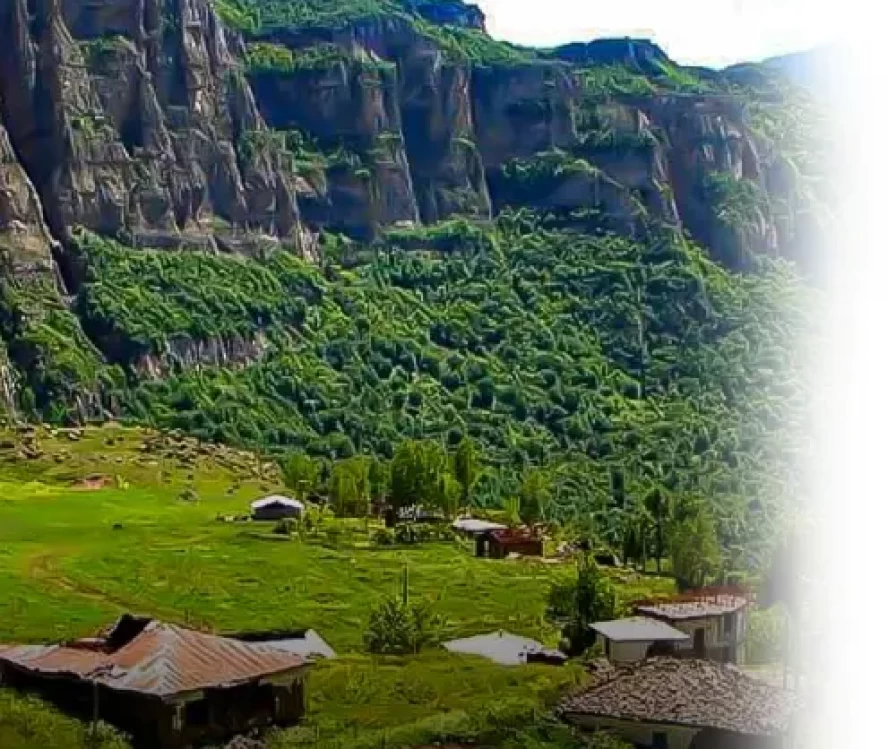
Abbas Abad complex
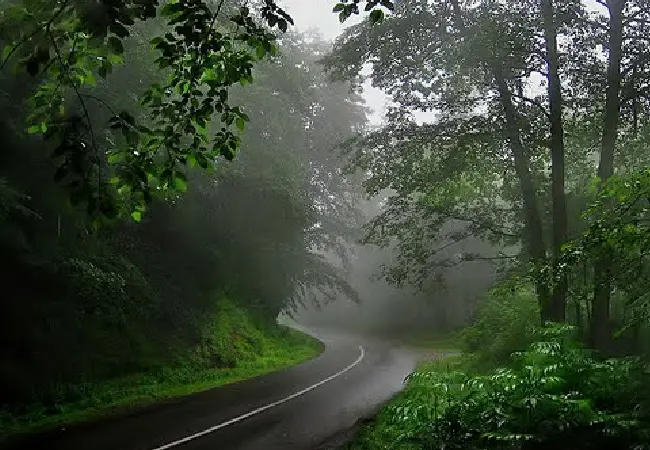
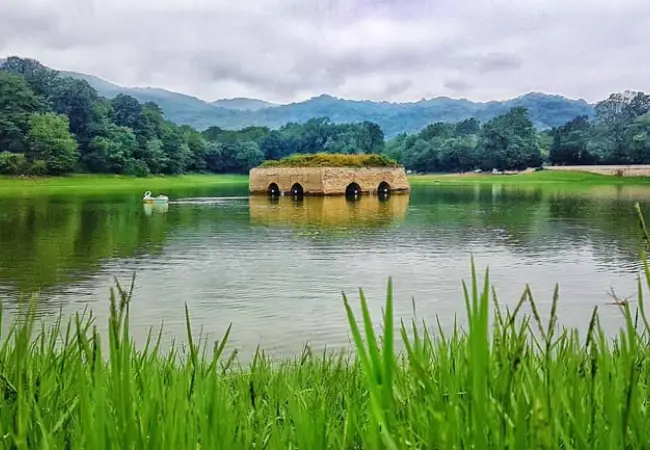
Abbas Abad Historical Complex
Abbasabad is a city in the Abbasabad County, located in the western part of Mazandaran Province, Iran. To the north, it borders the Caspian Sea; to the south, it connects with Kelardasht County; to the west, it neighbors Nashtarud; and to the east, it is adjacent to Salman Shahr, near the area formerly known as Motel Qoo or Saqi Kalaye. According to the latest census by the Statistical Center of Iran in 2016, Abbasabad has a population of 13,482. The people of Abbasabad are of Tabari ethnicity, with roots in the Amard and Tapuri tribes. They speak the Tabari language with the Kelarestaqi dialect, alongside Persian. Administratively, the cities of Kelarabad and Salman Shahr fall under Abbasabad County.
The historical name of the Abbasabad region was Lenga. The name Lenga first appeared in Mazandaran’s historical records in 277 AH, around 11 centuries ago, as one of the settlements in western Tabarestan. Before the Alavid dynasty, Lenga was always referred to as part of the Royan district. Historically, the Royan region extended from Noor County through Nowshahr, Chalus, and Tonekabon, sometimes reaching the western borders of Rudsar. Two dialects, Tati Kajoori and Tati Kelarestaqi, are sub-dialects of the ancient Tabari language spoken in Royan, spanning from Noor to Tonekabon. The Royani Tabari dialect was historically the language of the rulers of the Espahbod Royan.
In Tabari, Lenga means “carved” or “shaped” and is derived from Malinga, which refers to a place or base. The word Ling or Lang in Tabari means “foot.” The name Lenga is linked to the historical port and bay where small ships anchored, serving as a major water hub for loading and transportation.
Before Islam, Mazandaran was known as Tapuristan or Tipuristan, named after the Tapuri tribe, later referred to as Tabari. The Amard people were among the first ancient inhabitants of Mazandaran, with the Amards living from Amol to Tonekabon and the Tapuris from Amol to present-day Gorgan. During the Achaemenid era, the southern Caspian coast was inhabited by Tapuri, Amard, Anariyak, and Cadusian tribes. Historians link the Amards to Dahes, Scythians, and Persians. Herodotus mentions the Mard tribe among the nomadic Persians of the region, while Pliny the Elder identified the Amards in eastern Margiana. Strabo describes the Amards as mountain-dwelling tribes along with Tapuri, Cadusi, and Karti. The Tapuris lived in southeastern Mazandaran under Achaemenid rule, while the Amards were eventually conquered by Alexander the Great and later the Parthians. By 176 BCE, Phraates I of Parthia relocated the Amards to Khor, granting their former lands to the Tapuris, which became known collectively as Tapuristan. The regions of Lenga and Tonekabon were historically part of both Tapuri and Amardi territories.
The main occupations of Abbasabad residents are agriculture and horticulture. Rice is cultivated in spring and harvested in mid-summer. The region also produces kiwis, oranges, tangerines, and other citrus fruits. Recently, flower and plant production and export have become significant economic activities. The people of Abbasabad speak Tabari, maintain a rich cultural heritage, and have a strong interest in sports, particularly wrestling, which is among the most popular local sports.
• Mazichal Forest: One of the most beautiful forests and highlands in northern Iran, part of the Hyrcanian forests, dating back to the
• Tertiary period or the last ice age. Key trees include oak, maple, pine, mulberry, raspberry, apple, pear, hazelnut, wild plum, blueberry, cornelian cherry, and hawthorn.
• Khoshke Daran National Park: Located between Nashtarud and Abbasabad along the road, this protected area represents the last
• remaining lowland forest ecosystems of northern Iran, covering approximately 2.6 million square meters. Rare plant species include endangered hornbeam and other unique flora. Native wildlife includes jackals, wolves, wild boars, wild cats, herons, geese, ducks,
• and cormorants.
Abbasabad also hosts a natural history museum displaying taxidermied animals. The forested road from Kelardasht to Abbasabad is considered one of the most scenic roads in Iran, linking the two regions.
The shrine of Seyyed Kia Abolhassan in the village of Ziarat, part of Lenga, is a notable religious site. Seyyed Abolhassan al-Muayyad, a Zaydi leader, is buried here. Culture and Notable FiguresThe people of Abbasabad are culturally rich, with many poems and proverbs in Tabari. Notable figures include Ali Asghar Yousefnia (historian, writer), Mohammad Zaheri (poet and writer), Reza Azari Shahrzai (historian and writer), Jafar Mashaba Ouji (translator), Raika Amerji (musician), and Ali Khalili (designer and graphic artist).
Abbasabad is one of the most beautiful and significant tourist regions in Mazandaran Province. Unlike the generally arid and semi-desert regions of Iran, Mazandaran is a lush “jewel” on the Iranian plateau, home to a rich variety of plant and animal species, including rare and endangered species found only in the Hyrcanian forests. Its proximity to Tehran and other major provinces has made it a prime tourist destination. Theopening of the Tehran-North highway has reduced travel time from Tehran to less than four hours, further increasing visitor numbers. We hope that the Sana Persian team will soon have the honor of welcoming you to Iran, Mazandaran, and the tourist region of Abbasabad. Looking forward to that day in the very near future.
Contact Us
+989054577261









Connect with Us for Your Iranian Adventure
We would love to hear from you. Whether you're planning a trip to Iran or looking to collaborate with us, feel free to reach out. Let's connect and make your Iranian journey memorable!
Don’t like the forms? Drop us a line via email.
support@sanapersian.travel
© Rahweb 2024. All rights reserved
Contact Us
Contact Us
+989054577261© Rahweb 2024. All rights reserved