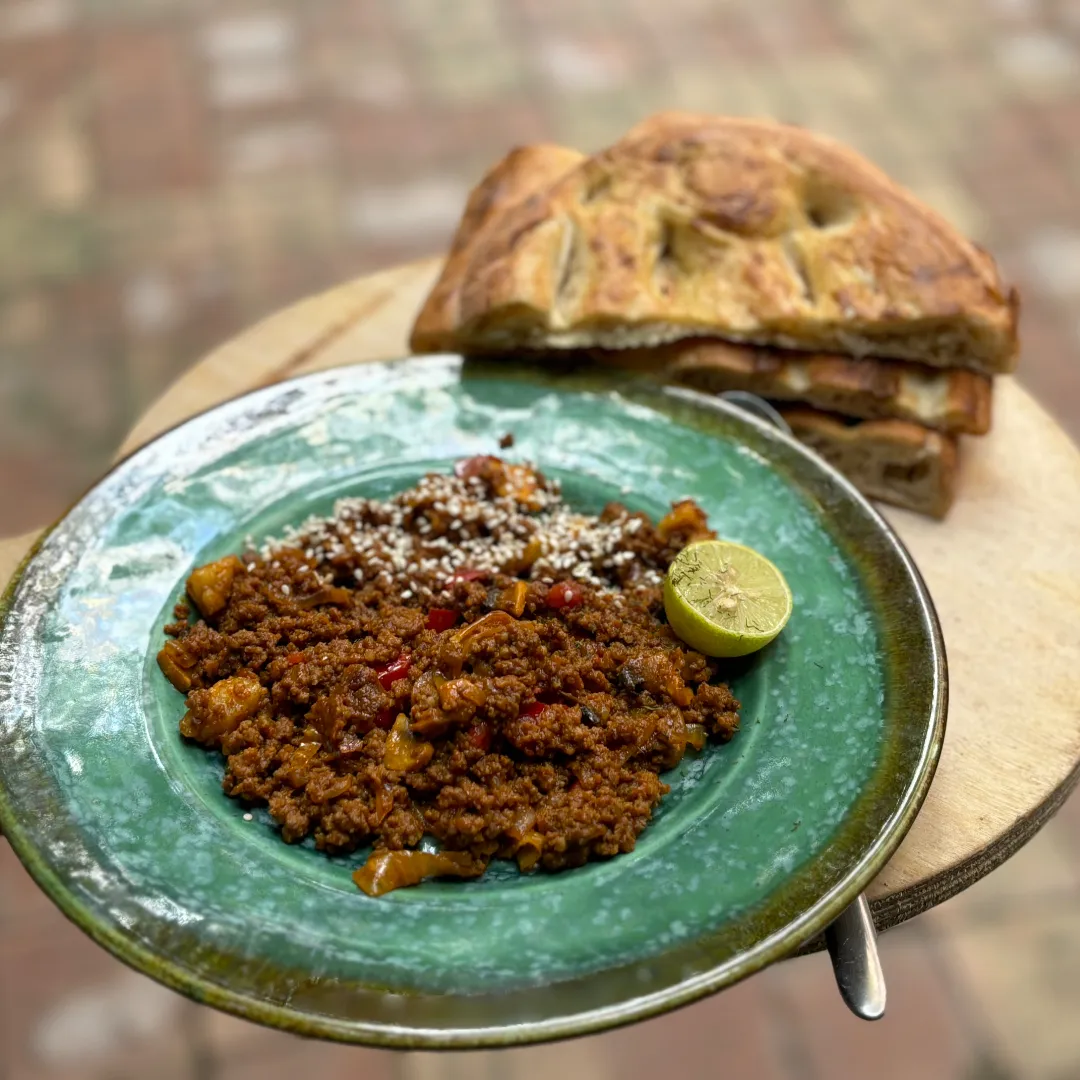
Bij Bij (Mazandaran Pan Kebab)
Bij Bij, also known as Mazandaran pan kebab or Bij Kebab, is a traditional and delicious dish from Mazandaran Province. Made from ground meat, onions, and tomato paste, it is beloved for its delightful taste and simplicity, making it very popular among locals and visitors. This tasty dish is similar to pan kebab and is usually served with steamed rice (kateh rice).
Ingredients for Bij Bij / Bij Kebab
• 300 grams ground meat
• 1 large onion
• 2 tablespoons tomato paste
• Salt and pepper to taste
• 1 teaspoon turmeric
• Oil as needed
• ½ cup water
Instructions of Bij Bij
1. Preparing the Ground Meat:
Mix the ground meat with grated onion, salt, pepper, and turmeric. Knead well until the mixture is uniform. This step is crucial for flavor and texture.
2. Frying the Meat:
Heat some oil in a pan and place the meat in small pieces or as a large flattened portion. Cook over low heat until both sides are golden and fully seared.
3. Adding Tomato Paste:
After frying the meat, add the tomato paste to the pan and sauté briefly to remove its raw flavor. Then add half a cup of water and let the meat cook for a few more minutes so the flavors blend well.
4. Final Cooking:
Allow the Bij Bij to simmer gently until the water reduces slightly and the flavors of meat and tomato paste are well combined.
Serving:
Serve Bij Bij with steamed rice or saffron rice. It is
often accompanied by fresh herbs or yogurt.
Bij Bij is considered one of the most delicious and popular dishes of Mazandaran.
We hope, in the near future, to welcome you in Mazandaran Province, Sari, and invite you to enjoy authentic Mazandaran Bij Bij.
Looking forward to that day.
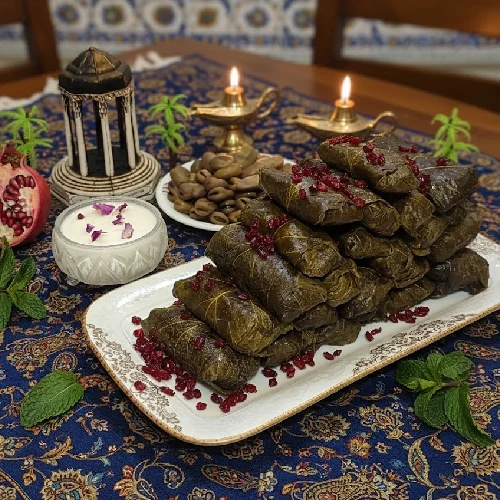
Borujerd-Style barge mo Dolmeh
Boorujerd-style grape leaf dolmeh is a traditional local dish from Borujerd and is considered one of the most delicious Iranian dishes. Unlike dolmeh in other regions, Borujerd dolmeh includes fava beans and low-fat yogurt, and traditionally uses animal fat for cooking.
Ingredients for Borujerd-Style Grape Leaf Dolmeh
• 30 thin grape leaves
• 4 cups finely chopped herbs: leek, chives, dill, savory, tarragon, mint, coriander, and parsley
• 1 cup dried fava beans or 2 cups fresh fava beans
• 1 kg sour yogurt
• 3 cups Iranian rice
• 4 tablespoons oil
• Salt, black pepper, and turmeric to taste
• 1 finely chopped onion
Instructions Borujerd-Style Grape Leaf Dolmeh
• Wash and clean the herbs thoroughly. Allow them to dry and then chop them finely.
• Heat some oil in a pan and sauté the chopped onion until soft. Add the herbs and continue
• to sauté.
• While sautéing, season with salt, black pepper, and turmeric. If using fresh fava beans, add them raw; if using dried fava beans, parboil them with some water.
• Wash the rice and boil it in salted water until it is half-cooked. Drain the rice.
• Mix the sautéed herbs and onion with the rice,
• fava beans, and yogurt. Sprinkle with a little salt.
• Take portions of the mixture and wrap them individually in grape leaves, either singly or as small bundles.
• Grease the bottom of a pot and arrange the wrapped dolmeh from the edges toward the center. To prevent them
• from unrolling, place a flat lid or plate over them. Pour in two cups of boiling water, cover with a cloth or tight lid, and cook on low heat until the grape leaves are tender.
• If you want to serve meat with the dolmeh, cook the meat separately without legumes and serve it alongside the dolmeh.
Additional Notes
• Preparation time for ingredients is approximately 1 hour, and cooking time is about 30 minutes.
• Borujerd-style grape leaf dolmeh can be served for lunch, dinner, or even as an appetizer.
• This recipe serves approximately 6 people.
We hope to welcome you in the near future to enjoy Borujerd dolmeh in Borujerd, Lorestan, Iran, and to host you as part of the Sana Persian team. Looking forward to that day.
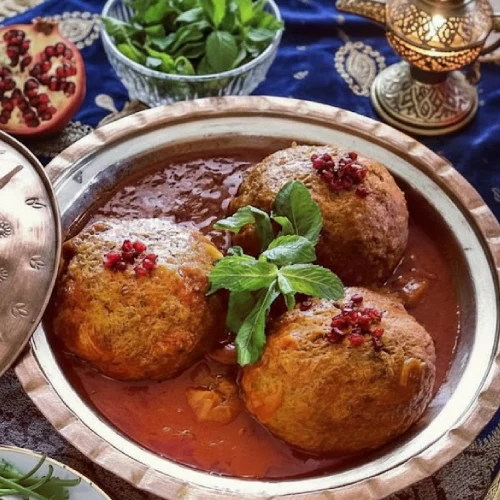
Chickpea Meatballs
Kufteh Nokhodchi is recognized as one of the most delicious and famous Iranian dishes, with many fans both in Iran and abroad.
Below is the method to prepare this traditional Iranian dish.
Ingredients of Kufteh Nokhodchi
• 250 grams of beef or lamb
• 2 medium onions
• 1 cup chickpea flour
• 2 cups water
• 2 tablespoons brewed saffron
• 2 tablespoons tomato paste
• 1 tablespoon dried or fresh aromatic herbs for kofteh, including mint, savory, and tarragon
• Salt, black pepper, and turmeric to taste
Instructions of Kufteh Nokhodchi
Step 1:
To prepare the kofteh, first cut the meat into small pieces and grind it finely using a meat grinder until smooth and uniform. In the past, when modern machines were unavailable, the meat was pounded in a stone mortar, which is why this dish is called "kufteh" (meaning "pounded" or "mashed").
Step 2:
Grate the onions finely. In a bowl, combine the ground meat with the chickpea flour and aromatic herbs (mint, savory, and tarragon).
Step 3:
Add salt, black pepper, and turmeric to the mixture. Knead well by hand until the ingredients are thoroughly combined and uniform. In a suitable pan, add some oil and heat it.
Step 4:
Take portions of the mixture, shape them into walnut-sized balls, and place them in the pan to fry completely. Continue this process until all the kofteh balls are fried.
Step 5:
Peel the remaining onions and wash them. Dice them finely and put them in a suitable pot with some oil on the heat.
Step 6:
Sauté the onions until soft and translucent. Add the tomato paste and continue to fry until it is fully cooked and the color brightens. Season with salt, black pepper, and turmeric.
Step 7:
Sauté a bit more to remove the raw smell of the spices. Add water to the pot and let it simmer lightly. Then add the fried kofteh balls to the sauce and allow them to cook for about 30 minutes.
Step 8:
Finally, choose a suitable serving dish, place the kofteh in it, and serve with saffron rice, your choice of pickles, and fresh herbs. Enjoy your meal! Kufteh Nokhodchi is considered one of the most delicious types of Iranian meatballs and dishes. We hope that in the near future, as part of the Sana Persian team, we can invite you to enjoy a delicious lunch or dinner in Khorramabad, Lorestan, Iran. Looking forward to that day.
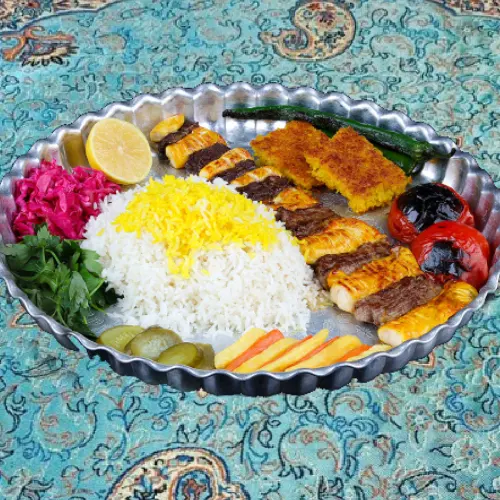
Bakhtiari Kabab
Bakhtiari Kebab is one of the traditional and well-known Iranian kebabs. It was originally prepared in Bakhtiari regions such as Chaharmahal-o-Bakhtiari , Khuzestan, and Isfahan, but today it has become a popular dish all over Iran. Traditionally, it’s made with lamb loin and chicken breast, though some people also replace the chicken with fish fillet to suit their taste.
How to Prepare Bakhtiari Kebab
Ingredients of Bakhtiari Kabab
- Boneless chicken breast: 150 g
- Beef or lamb fillet: 150 g
- Green bell pepper: 1 small
- Onion: 1 medium
- Brewed saffron: 1 tablespoon
- Fresh lemon juice: 1 tablespoon
- Olive oil or vegetable oil: 2 tablespoons
- Soy sauce: 2 tablespoons
- Softened butter: a small cube
- Salt and black pepper: to taste
Preparation steps of Bakhtiari Kebab
Grate the onion, squeeze out its juice, and mix it with the red meat along with half a teaspoon of black pepper and olive oil. Let the meat marinate in the refrigerator for 12–24 hours. Mix the chicken breast with saffron, onion juice, olive oil, salt, and pepper. Marinate in the refrigerator for 12–24 hours as well. Slice the onion and bell pepper. Add them to the marinated meat and chicken about 4–5 hours before skewering. In the last half hour, add lemon juice to the mixture. Before skewering, sprinkle a little salt on the meat. Thread the skewers by alternating a piece of chicken and a piece of red meat.
Grill the skewers over medium heat until both the chicken and meat are fully cooked. Brush the kebabs with butter while cooking. Your kebab is ready—enjoy! We look forward to welcoming you at Sana Persian in Chaharmahal-o-Bakhtiari, Iran, to share a delicious Bakhtiari Kebab with your family.
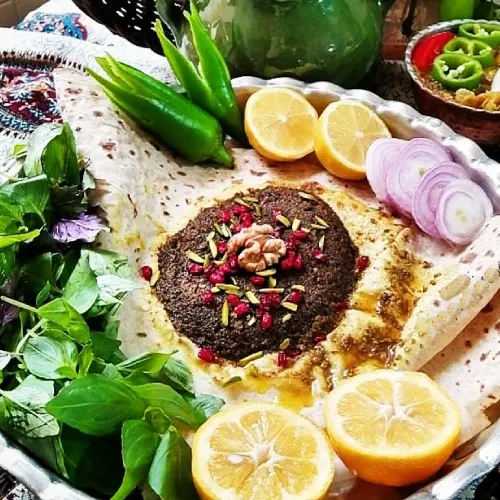
Beryani
Beryani in Farsi means roasted, and Beryani means something that roasted, chicken or lamb meat is favorite of Iranian people, we love Beryan chicken means roasted chicken but it is not limited to chicken meat, lamb meat is more favorite, but Beryani from Iran Isfahan is different, it is different whole the country and is on of favorite delicious food for local tourists which are visiting Isfahan itself. From an Iranian point of view, it is excellent food because it is made from lamb meat mostly from lamb neck boiled and mashed and added extra seasoning and from the other side it is full of fat, extra fat and greasy which is our favorite too, so it has two benefits at the same time. Today you can find Beryani in the capital, Tehran city or other big cities too. Some people from Isfahan started to open new restaurants and introduce Isfahan Beryani to other cities and they were successful too but tasting Beryani in Isfahan has its own position. Everybody who goes to Isfahan wishes to taste it, especially in restaurants around Naghsh-e jahan square. The ingredients of Isfahan Beryani are simple and convenient to prepare even in other parts of the world but the recipes are a little tricky. So let us start to make an original genuine Biryani.
The main ingredients of Beryani , enough for 4 people
1- Lamb meat ……………………………….500gr
2- Cinnamon ………………………………..1 teaspoon
3- Lung of a lamb…………………………...100gr
4- Onion ………………………………….….1 big piece
5- Fat of lamb (tail)……………………….….50gr
6- Liquid vegetable oil…………………..…. Adequately
7- Dried mint…………………………...…….1 teaspoon
8- Sault, black pepper………………..……. Adequately
9- Brewed saffron……………………………1 teaspoon
10- Pistachio, almond and walnut …………. not necessarily, some occasions
Recipe of Beryani
1- Roast chopped onion in a big pan and add oil, notice please, the very base of most Iranian food is roasted onions. be careful not to burn it.
2- Add lamb meat, add lamb tail fat, add 4 cups of water.
3- Let the mix boil properly on a very low flame. When the meat is well done and little of the juice remains in the pan, turn off the flame.
4- Separate meat and juice.
5- Mash and grind the meat and tail fat properly in a meat grinder.
6- Keep the juice in another vessel because we need it later.
7- Add dried mint, salt, black pepper and brewed saffron to the mix of meat and tail fat and grind it again to achieve a very fine paste.
8- In another pan add water to lamb lung and add chopped onion and boil it, add salt and black pepper and to spoons of oil and boil it on a very low flame, wait to boil the lungs properly.
9- Wait until the juice vaporizes and the lung gets a golden color. Turn off the flame.
10- Chop the longs to make a very fine paste.
11- Fry the mashed mixture of meat and tail fat like burgers and add cinnamon, fry the other side too.
12- Take a piece of flatbread and add remaining juice of boiling meat to wet the bread and put the fried burger on it.
13- Season and decorate the burger form by chopped lung and onions and walnut and almond and serve it when it is hot or warm enough according to your own taste.
Beryani in Isfahan is well known and favorite of many tourists visiting Isfahan, not very expensive and convenient to find. Next time you plan to visit Isfahan, never forget to taste it. It 's worth it. We are looking forward to visit you in Isfahan and treat you Beryani for a memorable lunch. Take care and plan your next summer party in Isfahan.
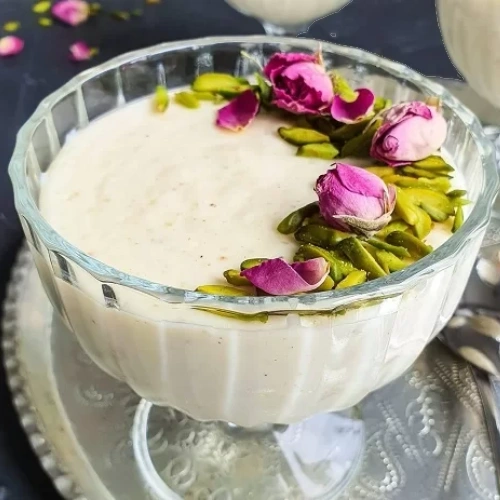
Ferni , a rice pudding
We have different puddings in Iran, like Shir Berenj ( milk and rice), Sholle Zard (saffron and rice), Ferni ( rice pudding), but among all deserts in Iran Isfahan ,Ferni is different. It is served cold or warm depending on the season and mostly served in winter, hot and warm. It is one of the most favorite meals in Isfahan and big shops prepare and serve it in the cold winters of Isfahan in the heart of the desert. In the cold morning it is a very rich and delicious breakfast and in the afternoon it is a very good supper. Local tourists love it and recommend it to other tourists to taste it. The vase of Ferni is ground rice and little milk. So let us start a genuine Ferni but never forget to taste it in Isfahan.
The main ingredients of ferni
1- Ground rice………. ………………………...…...….3 large spoons
2- Water…………………………………………...…….1 cup
3- Milk ………………………………………………......1 cup
4- Grape or dates thick syrup………………….……. On large spoon
5- Starch ………………………………………...……. 2 large spoon
6- Cardamom, rose water, chopped pistachio ……. Adequate.
Recipe of ferni
1- Poor well fine grounded rice in a proper pan and stir it with a wooden spoon until the rice dissolves in milk and a good mixture is achieved.
2- On a low flame, warm the mixture until boiling.
3- In a vessel add water to starch and stir it until the mixture get milk color
4- Add water, starch and milk together and stir until the mixture binds properly. Do this step very slowly.
5- Add rose water and cardamom to the mixture.
6- Some people add grape thick syrup or decorate it with fruit syrup like date and grape after cooling down and add some pistachio or almond powder.
7- Some people serve it Hot or cold, it depends on you to choose the way of serving Ferni.
8- Because Ferni after cooling down is thicker, be careful not to over boil it and turn off the flame at a specific time. By experience you can find out the best time.
Ferni is a very popular, tasty and full of energy pudding. The taste of syrup and rose water inside is a good experience. So next time you are visiting Isfahan, never forget to taste Ferni. Sanapersian looking forward to sharing the taste of Ferni with you. So plan your next visit to Isfahan in winter to taste Isfahan Ferni.
Baslugh
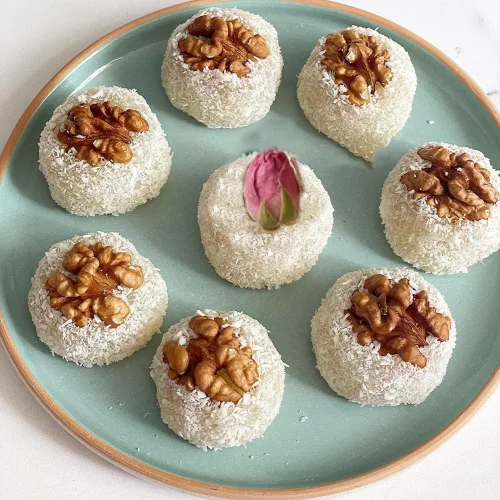
Among Iran’s traditional sweets—especially in the province of Hamedan—Baslogh holds a special place. It is a delicate confection made from starch, sugar, and sometimes grape molasses (dooshab). Today, its surface is usually coated with shredded coconut and often decorated with half a walnut kernel on top. Baslogh is a seasonal delicacy, often enjoyed alongside mixed nuts during festive occasions such as Yalda Night and the New Year holidays. It is also one of the most beloved souvenirs of Hamedan, admired for both its quality and flavor, and is considered a fine example of the city’s traditional culinary craft.
Traditional Medicine Perspective
According to Persian traditional medicine, foods are classified as having either a “warm” or “cold” nature—a key principle dating back to Avicenna’s teachings. Baslogh is regarded as having a warm temperament and has long been used for its health benefits. Because it contains nutrients such as iron and folic acid, it is believed to support memory, heart and vascular health, and strengthen bones.
Main Ingredients
- Starch
- Sugar
- Water
- Rosewater
- Shredded coconut (for coating)
- Walnut kernels (for garnish and added nutrients)
- Grape molasses (dooshab), sometimes used for its vitamins and minerals
Benefits in Traditional Medicine
- Enhances memory and brain function due to its minerals and vitamins
- Strengthens the heart and blood vessels, helping prevent clot formation
- Helps combat anemia thanks to its high iron and folic acid content
- Boosts the immune system
- Promotes bone and skeletal health
Because of its taste and health value, Baslogh is widely enjoyed during cultural celebrations such as Nowruz and Yalda, often served with tea or herbal infusions.
How to Prepare Baslogh
Ingredients of baslogh
- ½ cup rosewater
- 1 cup starch
- 1 cup sugar
- 100 g shredded coconut
- 100 g walnut kernels
- 2 cups cold water
- 25 g butter (about half a stick)
Preparation Steps
Pour the cold water into a pot and dissolve the starch in it. Stir gently over low heat with a wooden spoon until the mixture becomes smooth and lump-free. Gradually add the sugar, stirring continuously to prevent sticking. Once it is fully dissolved, briefly remove the pot from heat, stir well, then return it to the stove. Keep stirring for about 20 minutes until the mixture thickens into a dough-like consistency. Turn off the heat, add rosewater and butter, and mix until a firm, smooth dough is formed. Shape the mixture into logs about 3 cm thick, then cut into bite-sized pieces. Roll each piece in shredded coconut until fully coated, and press half a walnut kernel on top. Place the pieces in the refrigerator until set. Your Baslogh is now ready to serve—either on its own or accompanied by tea and other warm beverages. Baslogh remains one of Hamedan’s signature sweets, cherished both as a festive treat and as a cultural souvenir. We look forward to welcoming you one day in Hamedan, where you can enjoy a cup of tea with fresh, homemade Baslogh.
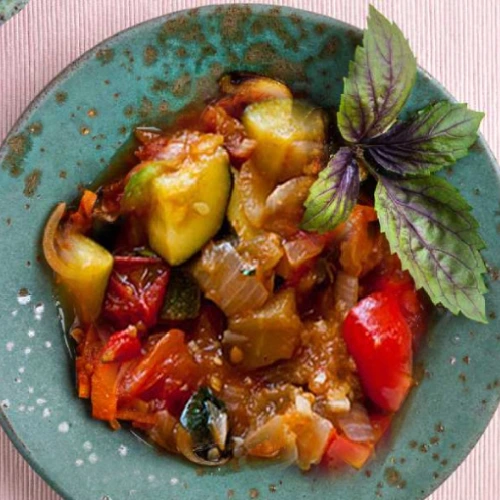
Yatimcheh
One of the tastiest – and perhaps one of the few truly vegan – dishes in Iran is Yatimcheh Mashhadi. This delicious stew is made entirely with plant-based ingredients and is very simple to prepare. With just a little cooking experience, you can easily make and enjoy it.
Ingredients for Yatimcheh Mashhadi
- Eggplant, diced – 8 cups
- Tomato, chopped – 4 cups
- Onion, chopped – 1 cup
- Butter – 5 tablespoons
- Salt and saffron – to taste
Preparation
Chop the tomatoes into small cubes. Peel the eggplants and cut them into slightly larger chunks. Set aside. Next, finely chop the onions and sauté them in butter until golden. Once the onions have caramelized, add the chopped tomatoes and let them release their juices. Then stir in the eggplants. Dissolve saffron and salt in a little water and add it to the mixture. Let the stew simmer gently on low heat for about 30 minutes until it thickens and the flavors come together. Serve warm with bread. While Mashhad’s Yatimcheh is simple and rustic, the version made in Neyshabur—a city about two hours away—is prepared in a more elaborate and festive way. Here’s how it’s done.
Ingredients for Yatimcheh Neyshaburi
- Chickpeas – ½ cup
- Red beans or pinto beans – ½ cup
- Lentils – ½ cup
- Eggplants – 3
- Onions – 2
- Tomatoes, chopped – 2
- Kashk (fermented whey) and dried mint – to taste
- Salt, pepper, turmeric – to taste
Cooking method
Step 1 – Preparing the legumes
Soak the beans overnight, changing the water a few times to reduce bloating and help them cook faster. If the lentils are slow to soften, cook them separately.
Step 2 – Preparing the eggplants
Peel and dice the eggplants into large cubes. Sprinkle with a little salt and soak them for 30 minutes to draw out the bitterness. Rinse, drain, and pat dry, then fry lightly in oil until golden.
Step 3 – Making the base
Chop the onions and fry with a touch of turmeric until soft and lightly golden. Add the cooked beans and lentils, along with some water, and simmer until everything is tender.
Step 4 – Finishing the stew
In the last 20 minutes of cooking, add the fried eggplants and chopped tomatoes. Allow the dish to simmer until thick and well-blended. Once it reaches a rich consistency, it’s ready to serve. Garnish with kashk and dried mint if you like. This Neyshaburi version is more suitable for gatherings and special occasions. As you can see, Yatimcheh is both simple and flavorful. You can prepare it quickly at home and enjoy a wholesome meal. We look forward to the day when we can welcome you in Iran—whether in Mashhad or Neyshabur—and share this dish with you in person.
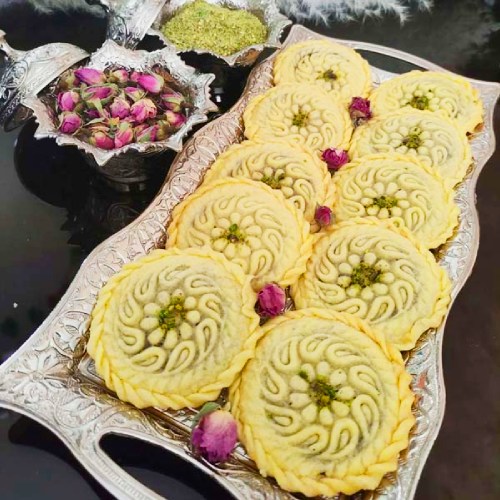
kolompe
Kolompeh is a special sweet from Kerman, very similar to Sistani cookies, and is handmade with a filling of dates, spices, especially cinnamon, pistachio powder, and more. Traditionally baked in a clay oven, it is now produced in industrial ovens and is exported not only within Iran but also to various parts of the world. For centuries, kolompeh was made by hand and was quite simple to prepare, but today, various molds and modern machines are used to shape it. Here’s how to make this beautiful, delicious, and unique Kerman sweet.
Ingredients for Kerman kolompeh
- Flour: 2.5 cups (about 260 grams)
- Egg yolk: 1
- Milk: 0.5 cup
- Baking powder: ¼ teaspoon
Ingredients for the Filling
- Dates: 250 grams (pitted and thoroughly mashed)
- Oil: ¼ cup (approximately 38 grams)
- Rosewater: a small amount
- Yogurt: a small amount
- Baking powder, rosewater, and saffron as needed.
Steps to Prepare and Bake Kerman Kolompeh
1. Start by mixing the flour and oil in a bowl, kneading it well until a uniform dough forms. In another bowl, combine the egg yolks with saffron, yogurt, and baking powder until well blended.
2. Mix the dough with the above mixture thoroughly. Cover the dough and refrigerate for two hours to rest and reduce its stickiness.
3. Remove the dough from the refrigerator. Spread a layer of plastic wrap on a flat surface, place the dough on it, and cover it with another layer of plastic wrap. Roll out the dough until it reaches about one centimeter in thickness.
4. Remove the plastic wrap and use a round mold to cut out circles for the final kolompeh. If you don’t have a mold, you can use a glass.
5. On each circle, place a small amount of the filling you prepared earlier, then cover it with another layer of dough and pinch the edges with your fingers to seal the filling inside.
6. At this stage, you can use various wooden stamps and molds to decorate the surface of the kolompeh.
7. Arrange the kolompehs on a baking tray and bake them in an oven preheated to 160 degrees Celsius for about 15 to 20 minutes.
8. Once you are sure the dough is baked, remove the kolompeh from the oven and let it cool completely.
For storage, you can keep kolompeh in a sealed container for a while. Note that this sweet is moisture-absorbent, so it’s best stored in a completely dry and cool place to prevent the filling from spoiling.
Kolompeh is usually served with tea. We hope that in the very near future, as the Sana Persian team, we will have the pleasure of hosting you and inviting you to enjoy a cup of tea along with Kerman kolompeh. Looking forward to that day!
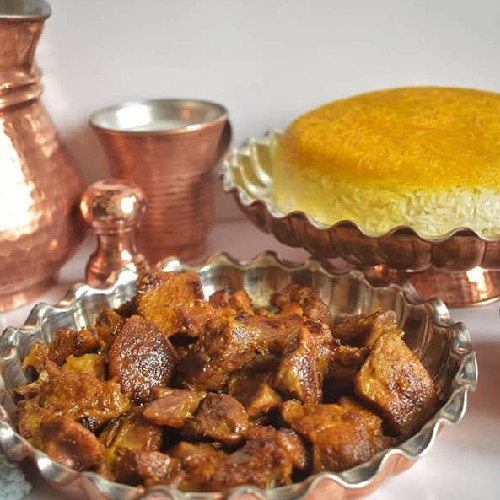
Qayrmeh – A Traditional Kurdish Delight
If you're a fan of wild artichokes (known locally as kangar) and would like to enjoy them in a flavorful, traditional dish, we highly recommend trying Qayrmeh. This hearty meal is a local specialty of Sanandaj and the Kurdistan province of Iran, where wild artichokes are the star ingredient. Served with either bread or rice, Qayrmeh makes for a complete and satisfying meal. Also known as Kurdish fried kangar, this dish is packed with flavor and nutrients. It’s rich in vitamins and proteins and surprisingly easy to prepare. Typically enjoyed with flatbread or steamed rice, it brings both nourishment and tradition to the table. Wild artichoke (kangar), the main ingredient, has long been valued for its medicinal and digestive properties. It’s known to stimulate appetite, help regulate digestion, and even reduce fever. It also has natural detoxifying effects on the digestive system.
Ingredients of Qayrmeh
- Wild artichoke (kangar): 1 kg
- Strained yogurt: 1 cup
- Creamy yogurt: 1 cup
- Milk: 2 cups
- Flour: 1 cup
- Melted butter: 3 tablespoons
- Brewed saffron: 3 tablespoons
- Eggs: 3
- Salt and black pepper: to taste
- Baking powder: 1 teaspoon
- Vegetable oil: as needed for frying
Instructions of Qayrmeh
- Prepare the Kangar: Clean the wild artichokes thoroughly and remove all thorns. Wash well and chop them into small pieces.
- Make the Batter: In a bowl, whisk the eggs together with the melted butter and brewed saffron until well combined. Gradually add the flour while mixing continuously to create a smooth batter. Adjust with more flour if the mixture is too thin.
- Coat the Kangar: Add the chopped kangar to the batter and stir until all pieces are fully coated.
- Fry: Heat vegetable oil in a frying pan. Once the oil is hot, carefully add the batter-coated kangar pieces and fry until golden and crispy.
- Drain: Transfer the fried kangar to a strainer or paper towels to drain excess oil.
- Serve: Arrange the crispy pieces on a serving plate. Garnish as desired and serve with strained yogurt, flatbread, or steamed rice.
We hope that someday soon, the team at Sana Persian will have the pleasure of hosting you in Sanandaj, Kurdistan, where you can enjoy an authentic taste of Qayrmeh made the traditional way. Looking forward to that day.
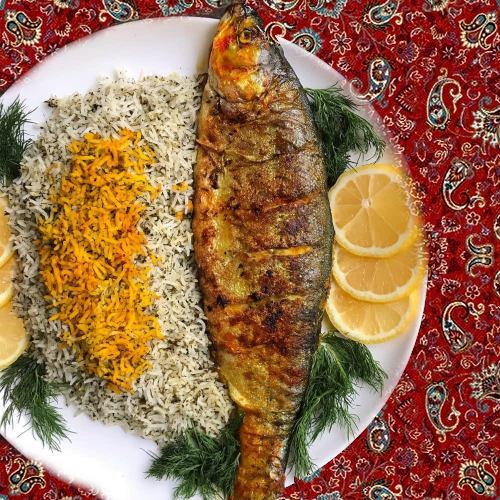
Tanoori Sobour Fish
Among the delicious Iranian dishes, fish holds a special and significant place. Fish itself has a unique status in Iranian culture, and even in the Haft-Seen table, the beautiful fish bowl symbolizes water and prosperity in our culture. In the past, when transporting fish was challenging due to its perishable nature, people tried to consume fish on New Year's Eve, albeit in salted and smoked forms. However, in provinces where fishing from the Persian Gulf and the rivers leading to it is easily accessible, fish plays a special role in the diet of the general population. Among the wide variety of fish caught by hardworking fishermen in the south, Sobour fish holds a unique place, and its grilled version is particularly appealing, tastier, and healthier due to the absence of cooking oils.
Preparation Steps for Grilled Sobour
Preparing Sobour Fish
First, open the belly of the fish, remove its contents, and wash the inside thoroughly with plenty of water. It is not necessary to remove the fish scales, but doing so is better. To prevent burning, apply a little date syrup on the skin of the fish. Clean the belly of the fish well and rub some tamarind juice inside to ensure it absorbs well.
Preparing the Filling Sobour Fish
You need to fill the belly of the fish with aromatic herbs such as chopped coriander and fenugreek. To do this, wash and finely chop the herbs. Chop plenty of onions and garlic, sauté them in oil, and add them to the herbs. Mix the chopped herbs, sautéed onions and garlic with tamarind juice, tomato paste, salt, pepper, and fish spices thoroughly. Stuff this mixture into the belly of the fish and press it down well.
Grilling Sobour Fish
Place the fish in a grill basket and close it. Grill the fish over an open flame. You can use a charcoal grill or an oven. Generally, using a charcoal grill yields better results, imparting a unique smoky flavor to the fish. Otherwise, a gas grill can also be used. You can even place the fish in an electric oven. In any case, to prevent the fish from burning, aluminum foil can also be used. Grill the fish until both sides are well-cooked and golden brown.
Important Tips in Grilling Sobor Fish
Using a filling (the stuffing inside the fish) is essential for enhancing flavor, softening the fish's texture, and preventing the fish meat from burning, so pay extra attention to its preparation. It’s better to use fresh, high-quality, and tender vegetables. In addition to tamarind, you can use other spices and lemon juice, adjusting the amounts to your taste. Grilled Sobour fish can be served with steamed rice, pilaf, or pickles. If using an oven, grill the fish for 20 minutes at a temperature of 180 degrees Celsius. Using aluminum foil not only prevents burning but also helps retain more moisture in the fish, resulting in a tastier dish. Keep in mind that a skilled cook from Khuzestan knows well which spices and methods to use for better grilling of Sobour fish. Sanapersian hopes to invite you soon to Iran, Khuzestan province, to enjoy a delicious grilled Sobour fish in a warm home. Here’s to that day!
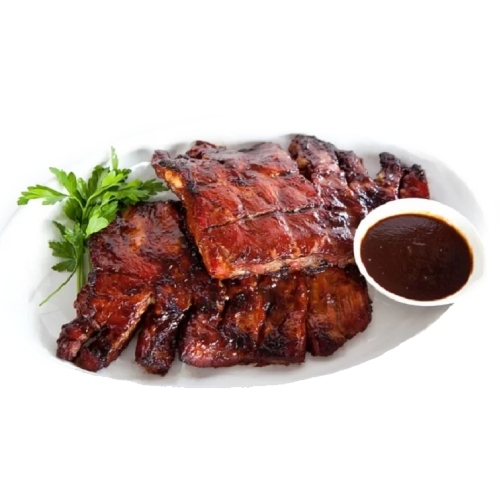
Dandeh Kebab
In Iranian culinary culture, kebab holds a special place, and each region offers its own unique twist. Among the many varieties, Kermanshah’s famous Dandeh Kebab (grilled lamb ribs) stands out as a true delicacy. Anyone passing through this western city should treat themselves to this unforgettable dish at least once. Iranian kebabs are traditionally made from lamb—specifically tender cuts from young male lambs. For the best result, it’s recommended to ask your trusted butcher for soft lamb rib meat, preferably from the upper rack area. The key to a flavorful and tender Dandeh Kebab lies in marinating the meat. The longer it rests in the marinade, the richer the taste and texture.
Ingredients of Kermanshahi Ribs Kebab (Serves 4):
- 1 kg lamb ribs (preferably meaty and fresh)
- 2 medium onions
- 1 clove of garlic
- 1 cup full-fat strained yogurt
- Salt and black pepper to taste
- A dash of oil, ideally extra virgin olive oil
Preparation of Dandeh Kebab
- In a large bowl, mix the yogurt, crushed garlic, olive oil, salt, and pepper until smooth.
- Cut the ribs between the joints into individual pieces and fully coat them in the marinade.
- Cover the bowl with a lid or wrap tightly with plastic wrap and refrigerate for at least 5–6 hours. For best results, let it rest overnight.
Grilling in Dandeh Kebab process
Once the marination time is over, remove the ribs and wipe off excess onion and garlic to prevent burning. Thread 3–4 pieces onto each skewer, depending on their size and the width of your grill. Heat the charcoal thoroughly until glowing red. Place the skewers over the heat and avoid fanning excessively—slow, even grilling is essential to cook the meat all the way through without burning the surface. Some chefs gently brush the ribs during grilling with a light sauce made from oil, lemon juice, salt, and pepper. This helps keep the meat moist and flavorful. Avoid overcooking the ribs—ideally, they should be slightly juicy in the center. If the coals begin to cool, gently regroup them and fan briefly to revive the heat before placing the skewers back.
Serving Dandeh Kebab
To serve, place a layer of flatbread at the bottom of the serving dish to soak up the rich, flavorful juices—many consider this the best part! The kebab can be served with steamed Persian rice or kateh (soft, buttery rice). Dandeh Kebab is without a doubt one of the tastiest traditional kebabs in Iran. If you ever find yourself in Kermanshah, don’t miss the chance to enjoy this extraordinary dish. We sincerely hope to welcome you soon in Kermanshah to share this unforgettable culinary experience. The Sana Persian team looks forward to hosting you in the near future.
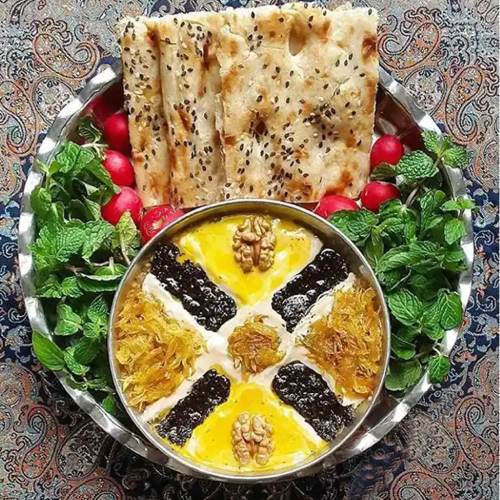
Ash Kalam Qomri or Kohlrabi
In the desert cities of Iran, due to the salinity of the water, Ash or Abgoosht Ghonabid or Kalam Qomri holds a special place. Kalam Sang or Kalam Qomri or Ghonabid has beneficial properties for the kidneys and prevents the formation of kidney stones. Keep in mind that water is very scarce in the desert, and due to the presence of various salts, the possibility of developing kidney stones is very high. For this reason, the people of the desert consume Ghoonbid in various forms, with Ash Ghonabid being very common. Ash Ghonabid or Ghoonbiyeh is very popular in Qom and is seen on the menus of the best restaurants in Qom. Experiencing the taste of this Ash among the famous Iranian Ashes like Ash Reshteh or Ash Jo is a unique and delightful experience. The aroma and flavor of this Ash are truly exceptional, and more importantly, it has many benefits for the body, especially for the kidneys.
Ingredients Ash Ghoonbid
- Lamb meat: 250 grams
- Kalam Qomri: 500 grams
- Rice: 1.5 cups
- Meat broth: half a cup
- Oil: half a cup
- Onion: one piece
- Salt, pepper, and turmeric: to taste.
Recipe for Ash Ghoonbid for Six People
1. Wash the Kalam Qomri well and cut it into medium-sized cubes.
2. In a suitable pot, pour some oil and place it over low heat. When the oil is hot, sauté the Kalam in the oil.
3. Wash the onion and chop it finely. Sauté the chopped onion with some salt, pepper, and turmeric along with the Kalam until golden.
4. Cut the meat into small pieces and add it along with the rice and meat broth to the pot containing the onion and Kalam.
5. Add some water to the pot and reduce the heat so that the Ash cooks slowly and thickens. Don’t forget to stir the Ash occasionally to prevent it from sticking to the bottom.
6. When the meat is fully cooked, the Ash is ready. You can serve it in a suitable dish and garnish it with some fried onions, fried garlic, and fried mint, then enjoy.
Benefits of Ash Ghonabid
Kalam Qomri is one of the lesser-known vegetables, but it has very high nutritional value. This vegetable is rich in fiber, various vitamins, and folic acid, and it’s good to incorporate it into your diet by preparing dishes like Ash Ghonabid . Kalam Qomri is also known as Kalam Neg and Dasheh Kalam. Eating this Ash is very beneficial and can be very good for health. Some benefits of Kalam Qomri include:
- Helping to lose weight
- Strengthening vision
- Preventing constipation
- Aiding digestive function
- Proper and optimal functioning of the kidneys
- Strengthening the immune and defensive system of the body
- Reducing the risk of neurological diseases and MS
- Helping to control blood sugar and blood pressure
- Anticancer properties due to its high antioxidant content
- Improving iron absorption
- Preventing blood vessel blockage
- And dozens of other nutritional benefits.
Sanapersian hopes to meet you soon in Qom. The Sana Persian team is ready to prepare your trip to this city. Looking forward to seeing you!
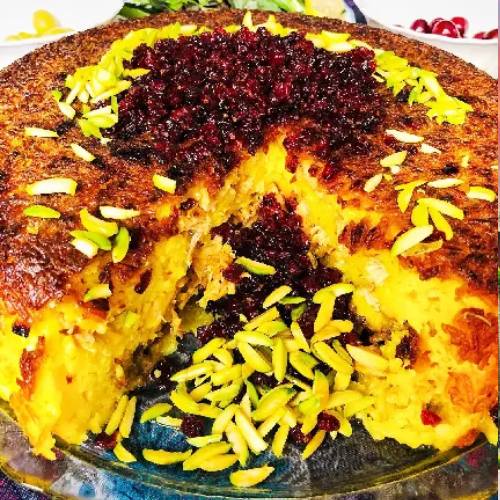
Shahmirzadi Tahchin
Tahchin Shahmirzadi is A Local and Traditional Dish from Semnan Province. One of the main components of Iranian cuisine in recent years has been rice, and tahchin is at the top of rice dishes in the Iranian diet, and Semnan Province is no exception to this rule. Tahchin from Garmsar, tahchin from Damghan, and tahchin from other cities of Semnan are each unique in their own way, but tahchin from the city of Mirzadi is a special and unique phenomenon. Tahchin from the city of Mirzadi is one of the local and traditional dishes of Semnan Province and Shahmirzad County. Shahmirzad is a summer resort area in Semnan Province, located 25 kilometers from the province, known for its pleasant and summer-like climate, making it one of the most important tourist destinations. Therefore, its dried fruits and dishes are very delightful and pleasant. Next, we will discuss how to prepare this delicious and popular dish.
Ingredients for Three People
- Rice: 2.5 cups
- Lentils: 1 cup, cooked
- Chopped herbs: 250 grams
- Lamb meat: 500 grams
- Spices including turmeric, black pepper, and mixed spices as needed.
Ingredients for Garnish
- Small beets: 3 pieces
- Small potatoes: 3 pieces, one of which should be sliced.
- Small kohlrabi: 2 pieces
- Small fried eggplants: 2 pieces
- Sour grapes and sautéed spinach with fried onions, totaling 150 grams
- Dried plums: 50 grams
Cooking Instructions of Tahchin Shahmirzadi
First, wash the rice and soak it in salted water. Cut the meat into layers and season it with salt, pepper, and spices. Boil the rice slightly and before it becomes completely soft, add the lentils and herbs, then wait for a while as needed, and finally drain it in a colander.
Divide the rice into three parts and pour turmeric and oil into the bottom of the pot, spreading the first layer of rice at the bottom. Place the layers of meat on top of the first layer, and then spread more rice over this layer. At this stage, add the garnish ingredients on top of this layer of rice and again add more white rice over this layer. The fifth layer is the white rice that covers the entire surface. Place the pot on a very low flame and let it steam until it is well cooked through. After the rice has steamed well and the meat is thoroughly cooked, turn off the flame and wait a bit for it to cool down. Invert the tahchin onto a large plate and arrange the garnish around it. Tahchin Shahmirzadi is a feast in itself and has a global reputation. We hope that in the not-so-distant future, we will host you in Iran, Semnan Province, and its famous summer resort, Mirzadi, and invite you to enjoy this delicious and delightful dish. The Sana persian team is ready to host you. Looking forward to that day.
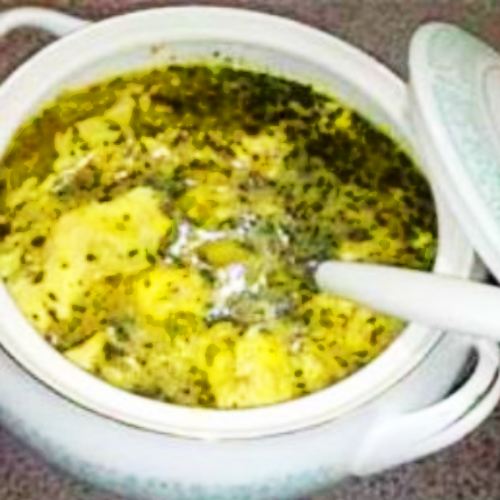
Potato Ashkene
Ashkeneh is a delightful and straightforward Iranian dish that can be prepared quickly and is enjoyed in various regions with different flavors and methods. This dish boasts a long-standing history, having been made for centuries with a consistent recipe. Originally, it was meatless, but over time, it has evolved, particularly with the introduction of ingredients like potatoes from other countries. For example, potatoes made their way to Iran during the Qajar period and quickly became a staple in Iranian cooking.
Ingredients for Potato Ashkeneh
- 1 large onion
- 2 medium potatoes
- 1 heaping tablespoon of wheat flour
- 3 eggs
- 1 tablespoon of dried fenugreek
- 1 tablespoon of turmeric
- Salt and pepper to taste
- 4 tablespoons of oil
Cooking Instructions of Potato Ashkeneh
1. Start by selecting a suitable pot and adding a bit of oil. Sauté the diced onions over medium heat until they turn golden brown. While frying, add the turmeric and sauté for a little longer.
2. Once the onions are golden, fill the pot halfway with boiling water.
3. Combine the flour with a small amount of cold water and mix well until it forms a smooth, thin mixture. Add this to the boiling pot and stir to blend with the onions.
4. Cut the potatoes into uniform cubes and add them to the pot along with salt and pepper.
5. Cover the pot and let it simmer for 30 minutes. Towards the end, increase the heat to thicken the mixture.
6. At this point, crack the eggs one by one into the stew, allowing them to cook thoroughly.
7. Finally, add the dried fenugreek and wait for its aroma to fill the pot.
8. Let the stew simmer until it is well-cooked.
This dish is typically served with bread and is often enjoyed in a mashed form. As you can see, this recipe is quite simple and entirely vegetarian, making it a great option for those who prefer plant-based meals. It’s nutritious and, despite its simplicity, incredibly flavorful. I hope you give this delicious dish a try. We look forward to welcoming you to Sana Persian soon, where you can savor this delightful meal in Iran, particularly in South Khorasan and the city of Birjand. Here’s to that day!
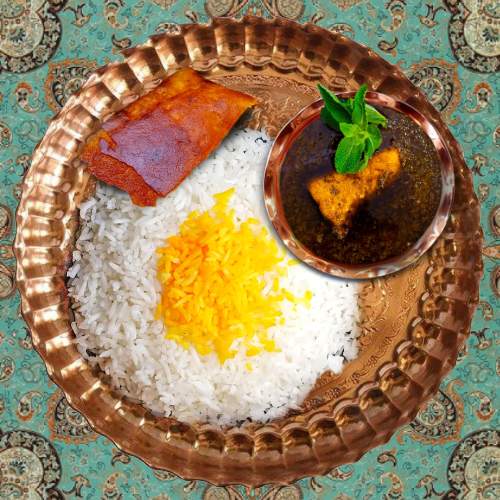
Ghalieh Mahi recipe [ Guide+ Photos+ Ingredients of Ghalie Mahi ]
One of the most delicious stews from southern Iran is Ghalieh Mahi. This dish is made using special herbs like coriander and fenugreek, tamarind, spices, onions, and southern fish. In Bandar Abbas, they typically use Shahri or Zobidi fish. In Ahvaz, in addition to fish like Hamour, shrimp is sometimes added to the stew. In Bandar Genaveh, they prepare Ghalieh with fish like Seokho or Hamaar. However, it's best to use fish that is boneless and has tender meat. Fish such as Sangsar, Hamour, Shahri, Seokho, Jash, Shorideh, and Sokun are considered the best options for Ghalieh Mahi.
Ingredients for Ghalieh Mahi (Serves 4):
- 4 pieces of fish fillet
- 2 onions
- 200 grams of tamarind
- 6 cloves of garlic
- 300 grams of coriander
- 50 grams of fenugreek
- Salt, black pepper, and turmeric to taste
- Oil as needed
Cooking Steps of Ghalieh Mahi
1. First, wash the fish thoroughly and season both sides with salt and black pepper to flavor it.
2. Wash and chop the fenugreek and coriander finely until soft. The herbs should be chopped uniformly.
3. Dice the onions and sauté them in oil until they become transparent and golden.
4. At this stage, add turmeric to the onions, then finely chop the garlic and add it to the onions. Be careful not to burn the garlic.
5. Next, add the chopped herbs to the mixture and sauté until the moisture from the herbs evaporates.
6. At this point, add half a liter of boiling water to the pot and allow the vegetables to cook well. After 15 minutes, mix the tamarind with a glass of water until it is well diluted and strain it completely.
7. Add the tamarind along with two more glasses of water to the mixture and reduce the heat to let it simmer.
8. If tamarind is not available, you can also use sour pomegranate paste.
9. In the last 30 minutes of cooking, sauté the fish pieces in oil to maintain their appearance.
10. Add the fish to the stew and let it simmer gently until the stew thickens and the fish is cooked through. This stew is usually served with plain rice.
Important Tips for Making Ghalieh Mahi
- If you’re not fond of the taste of fresh fish or if fresh fish is unavailable, you can use canned tuna, but do not add the tuna during cooking. Instead, serve the tuna pieces alongside the stew.
- Due to the high salt content of tamarind, it’s best not to add salt to the stew initially. Taste it first and add salt if necessary.
- If the dish is not sour enough, you can add more tamarind.
- Tamarind is typically served spicy, but if you prefer less heat, you can add a little red pepper.
- To eliminate the fishy smell, you can use more garlic.
- You can also use salmon or rainbow trout if needed.
- Cut the fish into thick slices to prevent them from breaking apart in the stew.
- The quality of tamarind is very important; it’s best to use the dark, firm variety.
- When simmering the stew, do not cover the pot to avoid it boiling over.
- If you want the stew to be oily, continue cooking over low heat for an additional 10 minutes after it’s done.
- You can sauté a bit of tomato paste in oil and add it to the stew midway through cooking for a richer color.
- Stir the stew gently to avoid breaking the fish pieces, and be cautious when serving.
Ghalieh Mahi is an elegant and festive dish. If you haven’t tried it yet, make sure to give it a shot at least once. Due to the presence of fish, vegetables, and spices, it is very nutritious. We hope to host you soon in Iran, specifically in Hormozgan province, while serving Ghalieh Mahi. The Sana Persian team looks forward to welcoming you in the near future. Here’s to that day!
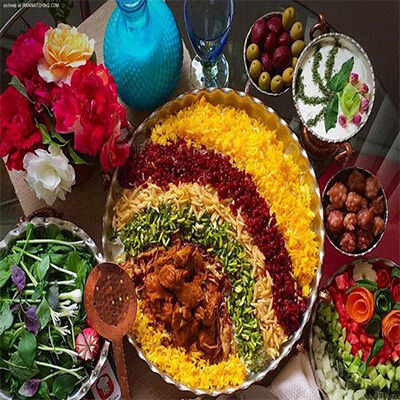
Gheymeh Nesar Qazvin
Gheymeh Nisar is a traditional dish from Qazvin, often served at weddings and special occasions. This dish is typically accompanied by fresh herbs.
Ingredients of Gheymeh Nisar
- Rice
- Meat
- Almond slivers
- Pistachio slivers
- Orange peel slivers
- Fried onions
- Barberry
- Saffron
- Cooking oil, salt, and pepper
There's a special spice mix from Qazvin called "Gheymeh Nisar spice," which, when used, makes the dish incredibly fragrant.
Ingredients List:
- 4 cups of rice
- 250 grams of lamb, cut into small pieces
- 1 onion
- ½ cup of dissolved saffron
- ½ cup of barberry
- 1.5 cups of slivered pistachios and almonds
- Cooking oil, salt, and pepper to taste
Cooking Instructions of Gheime Nessar
1. Start by soaking the rice, then boil it in water and drain it. Add the dissolved saffron to the rice and steam it until fully cooked.
2. Sauté the chopped onion until golden, then add the meat and continue frying until the meat changes color.
3. Add tomato paste to the meat and onion mixture, cover the pot, and reduce the heat to let it cook thoroughly and the liquid reduce. At this point, add the saffron.
4. Five minutes before the cooking is done and before the liquid from the meat completely evaporates, add the almond slivers.
5. Prepare the barberry by rinsing it in cold water. In a pan, heat some cooking oil, add a spoonful of sugar, and let it dissolve. Then, add the barberry and heat it gently, being careful not to burn it.
6. Add another spoonful of saffron to the meat mixture, stir well, and then add the barberry. Keep stirring to ensure the barberry maintains its natural color.
Serving Method of Gheime Nessar
Place half of the rice on a serving dish, then layer half of the meat mixture on top. Add the saffron rice over the Gheymeh, and top it with the remaining meat mixture. You can also sprinkle some slivered pistachios on top, and sometimes a bit of cinnamon as well.
Enjoy your Gheymeh Nisar! We hope that the next time you plan to visit Iran, especially Qazvin Province and the city of Qazvin, you will definitely go to a restaurant and order Gheymeh Nisar. We look forward to being your gracious hosts at Sana Persian and hope to see you soon!
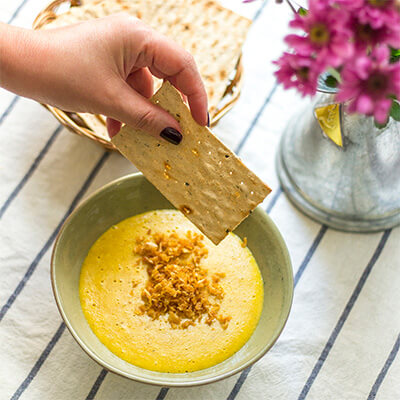
Kashk Zard
Kashke Zard is a fermented and dried mixture made from ingredients such as:
- Garlic
- Wheat bulgur
- Dill
- Cumin
- Coriander
- Turmeric
- Yogurt
- Salt
Initially, all these ingredients are mixed together and placed in a sealed container for several weeks to allow for proper fermentation before drying. The prepared mixture is then spread on a cotton bag and left to dry thoroughly. Once dried, the lumps are crushed by hand until they become a fine powder. This powder can be stored for a long time in the warm climate of Sistan without spoiling. Now, you can use this primary ingredient to prepare a delicious dish.
Ingredients for Kashk Zard Zabol or Kashk-e Zard Sistani
- 1 large onion
- 1 tablespoon of lamb fat or butter
- 1 clove of garlic
- 3 tablespoons of Kashk-e Zard
- 2 to 2.5 cups of boiling water
- Spices including salt, black pepper, and turmeric to taste
You can adjust the quantities based on the number of guests.
Preparation of Kashke Zard
To start cooking, first, chop the onions finely and sauté them in the oil or butter. While sautéing, add turmeric and pepper to release their aromas. Once the onions turn golden and change color, crush the garlic clove and add it to the mixture to enhance the garlic flavor. At this stage, add the Kashk-e Zard to the mixture.
If you don’t have Kashk-e Zard, you can purchase it from herbal shops. Now, stir the ingredients well and sauté until everything is mixed uniformly and the aromas of the spices are released. Next, add two cups of boiling water and stir continuously until the Kashk dissolves in the water, creating a uniform mixture. Cover the pot and let it simmer on medium heat for about 10 minutes. Once the dish thickens and is well-cooked, add salt to taste and serve. This dish can be served with local dried bread from Sistan.
Nowadays, sometimes chicken broth, tomato paste, tomato juice, or meatballs are added to enhance the flavor and aroma of the dish. Kashk-e Zard is typically prepared for breakfast, but it can also be enjoyed at other meals. The Kashk-e Zard powder can be used in other dishes and stews to enhance their aroma and flavor. Kashk-e Zard is a complete meal rich in protein and has high nutritional value.
Enjoy your meal! We hope to host you in Iran, Sistan and Baluchestan soon, enjoying a complete Kashk-e Zard on a beautiful winter morning. Looking forward to that day!
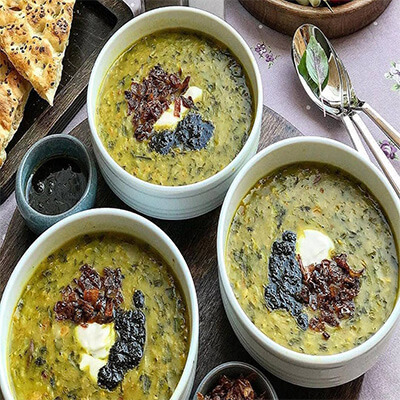
Shooli Yazd
Shooli, also known as Ash Shooli or Amacho, is the most famous soup from Yazd. It’s made with beets, vinegar, pomegranate paste, and a mix of greens like spinach, dill, and lentils. This dish, while simple, is incredibly tasty and light, making it perfect as both an appetizer and a main course.
Ingredients of Shooli Yazd
- Greens: 1.5 kg (half spinach and half a mix of dill, green onions, parsley, and a few sprigs of fenugreek)
- Beets: 2 large
- Onions: 3
- Dried mint: 2 tablespoons
- Flour: 1.5 cups
- Lentils: 1 cup
- Oil: as needed for frying onions and mint
- Salt: to taste
- Turmeric: 2 teaspoons
- Vinegar: to taste
Preparation of Shooli Yazd
1. Start by peeling the beets, then slice them thinly and place them in a pot with some water over low heat until they are partially cooked.
2. Once the beets are halfway done, add the lentils and chopped greens, allowing everything to cook thoroughly.
3. In the meantime, fry the onions and add the dried mint and turmeric to the pan.
4. Mix 4 to 5 cups of water with the flour and stir well until it’s combined.
5. When the greens and lentils are fully cooked, stir in half of the fried onions and let it simmer for a few minutes.
6. Next, pour about 4 cups of boiling water into the pot, and slowly add the flour mixture while stirring continuously until it reaches a nice, thick consistency.
7. Finally, season with salt and pepper, then add the remaining fried mint and onions along with the vinegar and pomegranate paste. Let it simmer for a bit longer to mellow out the vinegar's strong flavor.
And there you have it—Shooli is ready to enjoy! Some people like to serve it with a bit of extra pomegranate paste on top. Shooli is not only delicious but also nutritious and satisfying. If you ever find yourself in Yazd, make sure to give it a try! We hope to welcome you soon in Iran, specifically in Yazd Province and the city of Yazd, where our team at Sana Persian would love to treat you to some Shooli. Looking forward to that day!
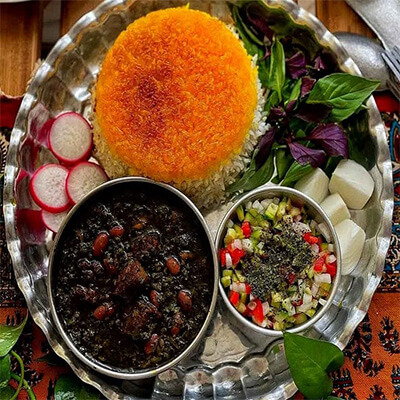
Ghorme Sabzi
Ghormeh Sabzi , also known as herb stew, is considered one of the most delicious and famous stews in Iran Especially in Tehran . As the name suggests, Ghormeh Sabzi is a mixture of meat (usually lamb) and vegetables, along with beans and other ingredients, which Sanapersian will explain further.
History and background of Ghormeh Sabzi
In the not-so-distant past, when refrigerators and other cooling devices did not exist and food spoiled quickly, the only way to preserve meat was to turn it into salted stew, which was often stored in the skin or stomach of sheep. Similarly, vegetables also spoiled quickly, so the only way to preserve them was to dry them and store them in a cool place to prevent insect infestations. Ghormeh Sabzi is unique in that it combines both preserved ingredients, making it a comforting dish during the cold winter months. Interestingly, Ghormeh Sabzi has even made its way into space! The famous astronaut Yasmin Maqbali took canned Ghormeh Sabzi with her to the International Space Station and served it to others on a festive occasion. The importance of Ghormeh Sabzi is such that the first Saturday of Azar (a month in the Persian calendar) is dedicated to it, officially named Ghormeh Sabzi Day.
Ingredients for Ghormehsabzi recipe
- Pure meat, preferably lamb with bones (the bones add better flavor to the stew)
- Chopped herbs for Ghormeh Sabzi, including leeks, parsley, fenugreek, cilantro, spinach, or beet greens, depending on the season
- Red or pinto beans (in some cities, black-eyed peas are also used)
- Salt, pepper, turmeric
- Seasoning including dried lime or sour grape juice, or both
- Liquid or solid oil (solid oil gives a tastier stew)
How to prepare Ghorme Sabzi
1. First, wash the herbs thoroughly, drain them, and chop them finely. If you're inexperienced, you can use pre-
packaged herbs.
2. Dice the onion and sauté it until golden. This may seem simple, but it’s crucial that the onion doesn't burn or remain raw; it should be perfectly golden. A popular saying goes, "The more sautéed onions in the stew, the tastier it will be."
3. Soak the beans for a few hours, changing the water a few times, and set them aside.
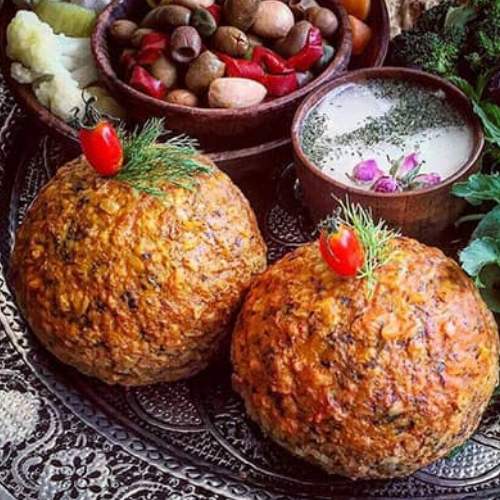
Koofteh Tabrizi
Kufteh is one of the favorite dishes of Iranians across various cities. The term "Kufteh" translates to crushed or ground, and in Azerbaijani , it is referred to as "Kufteh-si." While different types of Kufteh are made throughout the Middle East, Kufteh Tabrizi stands out for its exceptional quality. This is largely due to the diverse ingredients used, ranging from meat to fresh herbs and spices, as well as the culinary skills of both home cooks and restaurant chefs in Tabriz. The rich culture of the hardworking Azerbaijani people also plays a significant role in its popularity. In this delightful dish, a variety of aromatic herbs are incorporated. Traditionally, the meat was ground in large and small stone mortars using a wooden pestle until it was finely crushed. Lentils and aromatic herbs were then gradually added to the mixture. Today, we no longer see those stone mortars and long wooden pestles; instead, meat grinders are commonly used. To achieve the best texture, the meat is ground multiple times until it becomes finely chopped and soft. For added flavor, boiled eggs can also be included in the Kufteh. The center of each Kufteh is filled with walnuts, dried plums, and sour cherries, and it is garnished with a mixture of fried onions, special herbs, and barberries. The broth is flavored with tomato paste and saffron, enhancing its taste.
Ingredients of Kufteh Tabrizi
- Meat
- Rice
- Lentils
- Tomato paste
- Kufteh herbs (such as chives and marjoram)
- Chickpea flour
- Eggs
- Dried plums and sour cherries
- Salt, pepper, and spices to taste
- Fried onions
- Onions
Preparation Method of Kufteh Tabrizi
Start by soaking the lentils in cold water for a few hours to remove any gas. Cook the lentils with a little water until they are partially cooked, then drain and set aside. Wash the rice and boil it in a pot with water and salt until it is partially cooked. Rinse the rice with cold water and set it aside. Next, mash the rice and lentils together, but be careful not to over-mash them. If you want to add boiled eggs, prepare the desired number of eggs, peel them, and set them aside. To make the Kufteh sauce, boil four cups of water with fried onions, salt, pepper, a pinch of cinnamon, and tomato paste along with chopped chives and marjoram until the sauce thickens.
Grate the onion, squeeze out the excess water, and mix it with the meat. Combine the meat, onion, turmeric, salt, and pepper with chickpea flour until you have a uniform mixture. Clean the Kufteh herbs, wash them thoroughly, drain the water, chop them finely, and mix them with the meat and onion mixture. Knead again until the dough is completely uniform. Now, it's time to shape the Kufteh balls. Take a suitable amount of meat, place a boiled egg along with some dried plums and barberries in the center, and shape it into a ball with your hands.
Once all the balls are ready, pour the prepared sauce into a large pot and heat it on the stove. Be careful not to let it boil, as this could cause the Kufteh to fall apart. Gently place the balls in the pot and simmer on low heat for about 15 minutes to allow the Kufteh to set. Avoid moving or disturbing them during this time. After 30 minutes, gently turn the Kufteh to ensure they cook evenly. After about an hour and a half, you can turn off the heat. The Kufteh should be fully cooked at this point. Serve the Kufteh on a dish and pour the remaining sauce over them. You can also garnish with walnuts and tomatoes. Kufteh Tabrizi is often considered the king of Tabrizi dishes, and making it requires some experience. If you're trying to cook it for the first time, you might face a few challenges, but don't be discouraged. Remember, Kufteh Tabrizi is best enjoyed in Tabriz itself. We hope that one day, the Sana Persian team will have the pleasure of hosting you for a special lunch featuring this delicious dish in East Azerbaijan , Tabriz. Looking forward to that day!
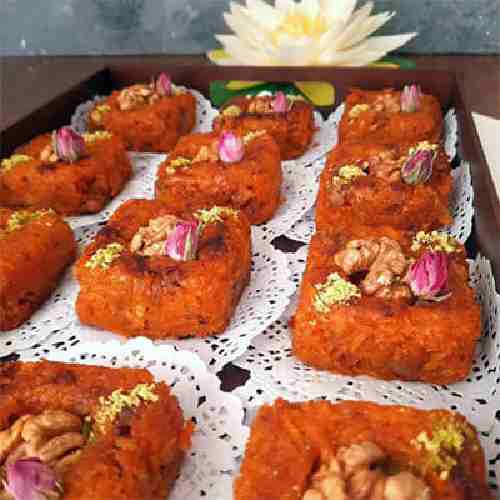
Qayganaq
Qayganaq is a delicious dessert or breakfast option that is incredibly tasty and is also known as Tabrizi Khagineh. Sanapersian tells you one of the most correct ways to cook it. In Persian, Khagineh refers to a dish made by whisking the yolks and whites of whole eggs and frying them in oil. The main ingredients of Khagineh are flour and eggs. Qayganaq is a type of thin Khagineh that is cooked in Zanjan and Tabriz, typically served as a breakfast alongside tea. What sets Zanjani Khagineh apart is the addition of syrup; sugar is mixed into the batter right from the start to give it a sweet flavor.
Ingredients of Qayganaq
- 3 eggs
- 3 tablespoons of yogurt
- 3 tablespoons of white flour
- 1 tablespoon of baking powder
- Rose powder (as needed)
- Saffron (as needed)
- Walnuts (as needed)
- Cinnamon (as needed)
- Vanilla (as needed)
- Cardamom and grape syrup (as needed)
- Pistachio and almond slivers (as needed)
- Butter (as needed)
How to Make Qayganaq
You can adjust the recipe based on the number of eggs, yogurt, and flour you have. For example, you can make Qayganaq with just two eggs, two tablespoons of yogurt, and two tablespoons of flour. Baking powder can be omitted if you prefer a less fluffy Khagineh.
1. Start by adding salt and vanilla to the eggs in a bowl, and whisk them well until everything is fully combined.
2. Next, add the yogurt, flour, baking powder, and saffron, mixing everything until you have a smooth batter.
3. Choose a suitable pan for cooking and grease the bottom with butter. Pour half of the batter into the pan and place it over very low heat.
4. Cover the pan to let the mixture set a bit. Then, sprinkle walnuts, cinnamon, rose powder, and cardamom on top, and cover it again to let it cook.
5. Gently pour the remaining batter over the top, cover the pan, and let it cook until it’s fully done.
6. Finally, flip the Khagineh to cook the other side until it’s golden and crispy.
In Tabriz , it’s common to prepare a syrup with sugar, water, and rosewater, which is poured over the Khagineh after it’s cooked. In Zanjan , this Khagineh is served with grape syrup. For decoration, you can use slivers of pistachio or almond and sprinkle some rose powder on top.
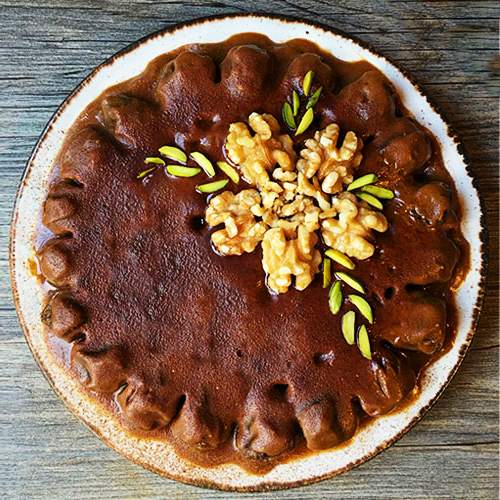
Ranginak
Ranginak dessert is a beloved sweet found throughout southern Iran, from Kerman and Fars to Bushehr , Hormozgan, and Khuzestan . It holds a special place among the various delicacies of the region. In the beautiful and abundant tables of the south, where fish often plays a significant role and is considered to have a cold nature according to traditional Iranian medicine, Ranginak brings warmth. Its warm properties help balance the body's temperament, preventing lethargy and illness, while its sweetness provides a boost of energy.
Ingredients of Ranginak
Ranginak can be likened to halva or kashk made from flour and oil, sometimes enhanced with spices like cinnamon for added flavor. This mixture is poured over dates. Occasionally, the pit of the date is removed, and a piece of walnut is placed inside to enhance its quality.
Ranginak recipe
1. Start by toasting wheat flour in a pan until it changes color slightly and loses its raw smell. At this point, add oil and, if desired, a bit of butter.
2. Pour the resulting mixture over the dates.
3. Sprinkle a little cinnamon powder on top.
4. If you like, you can place a piece of walnut inside the date.
5. You can also decorate Ranginak with pistachio powder, coconut, or walnut on top.
Ranginak has a special place on the tables of the southern people, and if you are their guest, you will definitely get to taste it. With a flavor reminiscent of halva, Ranginak's sweetness comes from dates instead of sugar syrup. Sanapersian looks forward to welcoming you to Iran, the south, and the beautiful southern table!

Ash Tarkhineh with Sirabi
Tarkhineh might be recognized as one of the oldest semi-prepared foods in the world. This dish is made from wheat and fermented Doug (a special Iranian drink, a mixture of yogurt and water) or milk and is used in many cities, including the provinces of Lorestan, Kermanshah, Kurdistan, Ilam, Markazi, Hamadan, and both West and East Azerbaijan, as well as in central regions. In addition to this, Tarkhineh is popular among the Kurds of Iraq, Turkey, and Syria, as well as among Armenians in Armenia and Greek people in Greece, Cyprus, Albania, Bulgaria, and parts of Iraq and Egypt. Tarkhineh is actually made from wheat soaked in Doug or kefir, then dried and formed into balls. It's worth noting that in times when modern tools for preserving food did not exist, drying in the sun was considered one of the preservation methods. To prepare Tarkhineh, bulgur wheat or barley is soaked in Doug for ten days, and then it is shaped into balls and placed in the sun to dry. Sometimes, to add fragrance to Tarkhineh, the balls are placed on wild mint leaves before being sun-dried.
Ingredients Ash Tarkhineh
Ash Tarkhineh is popular in the provinces of Markazi, Hamadan, Kermanshah, Kurdistan, West Azerbaijan, Ilam, and Lorestan. Ash Tarkhineh can be prepared in various ways. The common factor among all of them is the use of Tarkhineh, which can include ingredients such as bulgur wheat, doug, yogurt, dried mint, various spices like wild thyme, legumes like chickpeas and beans, and greens like spinach and beetroot, as well as fried eggplant and fried onions, which can be added according to preference.
Torkhineh soup with tripe recipe
In some regions, instead of soaking, bulgur wheat is boiled in sour Doug. The balls are then dried in sunlight or industrial ovens. In some areas, vegetables and legumes are added to Tarkhineh to make what is known as Ash Tarkhineh, and in some regions, cow or sheep Sirabi is added, resulting in Ash Tarkhineh with Sirabi. The additives to Tarkhineh are entirely based on personal preference and include a wide variety of ingredients and vegetables.
In Markazi province, seasoning ingredients like tomatoes and safflower are used along with cooked and dried wheat. The dried Tarkhineh is then used for quicker cooking.
Therapeutic Benefits of Ash Tarkhineh with Sirabi
It is claimed that Tarkhineh, due to its antibiotics and vitamins, has therapeutic properties for colds and flu during the cold days of the year. Whether near or far, the taste of Ash on a cold winter day is unparalleled. If you plan to travel to Markazi province, be sure to try Ash Tarkhineh with Sirabi.
Looking forward to seeing you in Iran, Markazi province, while trying Ash Tarkhineh with Sirabi. Until that day!
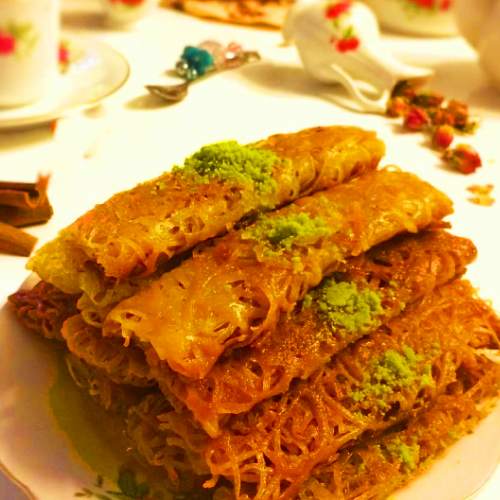
Reshteh Khoshkar
Reshteh Khoshkar is a traditional sweet from Gilan, primarily made during the month of Ramadan. Its flavor is reminiscent of Zulbia found in other cities. The key ingredient in Reshteh Khoshkar is rice flour. Until about seventy years ago, due to the inability to cultivate wheat in Gilan's lands, only rice flour was used for making sweets.
Ingredients for Reshte Khoshkar
- Rice flour
- Oil
- Ground cinnamon
- Chopped walnuts
- Sugar
- Water
Reshteh Khoshkar recipe
To prepare Reshteh Khoshkar, the rice must first be turned into rice flour. This involves soaking the rice and then drying it between two layers of cloth for a day and night. After a few days, the rice is finely ground into flour. The walnuts are chopped, and the cinnamon is ground well. The rice flour is mixed with water to create a relatively loose batter. In a high-quality copper pan, a little oil is added to grease the bottom, and it is placed over the flame. Next, the rice flour batter is poured into a special container that resembles a small colander. With horizontal and vertical movements, a network of rice flour is poured onto the hot surface and partially fried. The resulting mesh is flipped over, and the edges are folded.
A mixture of sugar, walnuts, and powdered cinnamon is placed inside this mesh, and the edges are completely folded over, forming a sort of pouch. In another pot, water and sugar are boiled together until thickened, creating a syrup. The Reshteh Khoshkar is separately fried in oil and then dipped into the syrup to sweeten it. Your Reshteh Khushkar is now ready!
Nutritional Benefits of Reshteh khoshkar
During Ramadan and in normal circumstances, partially cooked Reshteh Khoshkar is sold to customers, who then take on the task of frying and dipping it in syrup. Traditionally, Reshteh Khushkar has been made in homes during Ramadan due to its high energy and sweetness. However, nowadays, most people buy it either partially or fully cooked from outside and enjoy it after Iftar. If you plan to travel to Iran and Gilan, be sure to try Reshteh Khoshkar. You won’t forget its taste. We hope to see you in Gilan, enjoying a cup of tea with delicious Reshteh Khoshkar. Looking forward to that day!
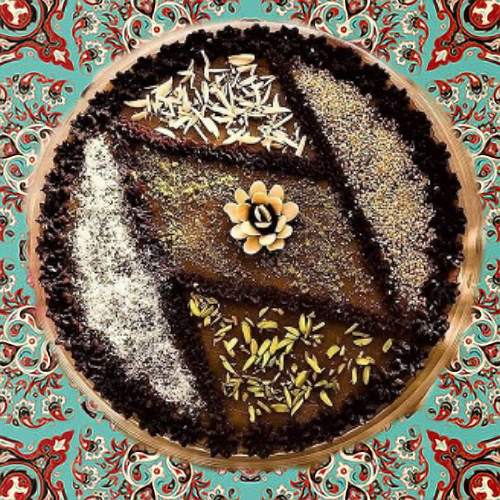
Black Halva
Black Halwa , known as " Halva Siyah " or " Halva Siah " in Persian, is a traditional sweet delicacy from Ardabil , a city in northwestern Iran. This unique dessert has a rich history that dates back centuries, often associated with local customs and celebrations. It is believed that the art of making Black Halwa was passed down through generations, becoming an integral part of the region's culinary heritage.
Ingredients for Black Halva
To prepare Black Halva, you will need the following ingredients:
- Wheat flour: The main ingredient that gives halva its texture.
- Butter or ghee: For richness and flavor.
- Sugar: To sweeten the halva.
- Water: To dissolve the sugar and create a syrup.
- Black sesame seeds: This is what gives the halva its distinctive color and nutty flavor.
- Cardamom: For a hint of spice.
- Rosewater: To enhance the aroma and taste.
How to Cook Black Halwa
1. Roast the Flour: Begin by heating a pan over medium heat and adding the wheat flour. Stir continuously until it turns golden brown and releases a nutty aroma. This step is crucial for developing the flavor of the halva.
2. Prepare the Syrup: In a separate pot, combine sugar and water, and bring it to a boil. Once the sugar has dissolved, add the black sesame seeds and cardamom, stirring well.
3. Combine Ingredients: Gradually pour the syrup into the roasted flour while stirring continuously to avoid lumps. Keep stirring until the mixture thickens and pulls away from the sides of the pan.
4. Add Butter: Once the halva reaches the desired consistency, add butter or ghee and mix until fully incorporated.
5. Shape and Serve: Transfer the halva to a greased dish, smoothing the top. Allow it to cool slightly before cutting it into pieces. Serve it warm or at room temperature.
Nutritional Benefits of Black Halva
Black Halwa is not only delicious but also packed with nutritional benefits. The main ingredients contribute to its health properties:
- Wheat Flour: A good source of carbohydrates, providing energy.
- Black Sesame Seeds: Rich in healthy fats, protein, and essential minerals like calcium and magnesium. They are known for their antioxidant properties and can help improve heart health.
- Butter or Ghee: Provides essential fatty acids and vitamins, contributing to overall health when consumed in moderation.
- Cardamom: Known for its digestive benefits and potential to improve oral health.
In conclusion, Black Halwa or Halwasiya from Ardabil is a delightful treat with a rich history and numerous health benefits. Whether enjoyed during special occasions or as a sweet snack, it remains a beloved part of Persian culinary tradition.
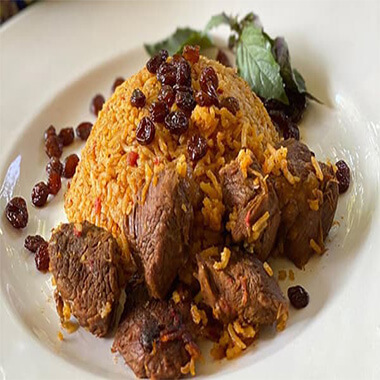
Chekdirmeh , rich flavors of Turkmen food
Discover the rich flavors of Turkmen food through its iconic dish, Chekdirme . This hearty stew, with a history spanning over a thousand years, is a staple at weddings, celebrations, and gatherings among Turkmen people. Let's delve into the ingredients, preparation, and different variations of this mouthwatering dish.
Ingredients for Chekdirme recipe
Traditionally, Chekdirme is prepared using a cast-iron pot known as a kazan which is mainly used to cook Chekdarme. The key ingredients include:
- Meat: Typically, lamb neck is preferred for its succulent flavor.
- Tomatoes: Fresh tomatoes add a tangy twist.
- Tomato paste
- Onion
- Oil
- rice
- Spices: A blend of salt, pepper, and other aromatic spices.
How to prepare Chekdirme
First, the meat is chopped and fried in some oil in a cast iron pot. In the next step, chopped onion and tomato paste or chopped tomatoes are added and fried well. At this stage, water is added to the mixture so that the mixture cooks well. When the meat is cooked, add rice to it, and if the water is low, add water until about three centimeters of water covers the rice and the mixture, then cover the lid of the container so that the rice can cook well. Another type of chakdarme is cooked in Turkmenistan, in which they use a lot of carrots instead of tomato paste and fresh tomatoes. This type of chakdarme is also cooked in Tajikistan.
Types of Chekdarme
Today, other types of Chekdarme are cooked, which are actually known as new and modern types and are different from the main dish. Types of Chekdarme include:
- Meat Chekdarme, which is cooked with mutton, mainly sheep's neck.
- Stuffed Bird Chekdarme: This type is cooked with various types of birds such as duck, quail, partridge or chicken, with wild duck being considered one of the best and most delicious. In cooking this type of Chekdarme, the bird is stuffed with prunes, carrots, raisins, onions and spices.
- Stuffed Fish Chekdarme: which is stuffed with fish, especially carp, with vegetables. Sometimes, sturgeon and Acipenser or Starry sturgeon are used and it is called "Yahana" in the Turkmen language and is considered one of the most delicious Chekdarme.
- Carrot Chakdarmeh, which uses carrots instead of tomatoes or tomato paste.
Experience Chekdirme in Golestan
If you find yourself in Golestan province, Iran, make sure to savor the authentic taste of Chekdirme. This dish is a must-try for food enthusiasts and travelers seeking an authentic culinary experience. Chekdirme is more than just a dish; it's a cultural treasure that has been passed down through generations. Its unique blend of flavors and versatility make it a beloved meal across Turkmenistan and beyond. If you travel to Golestan Province, be sure to try Chakdarmeh, it's worth. Hoping to see you in Iran, Golestan Province, and try Chakdarmeh. Hoping for that day.
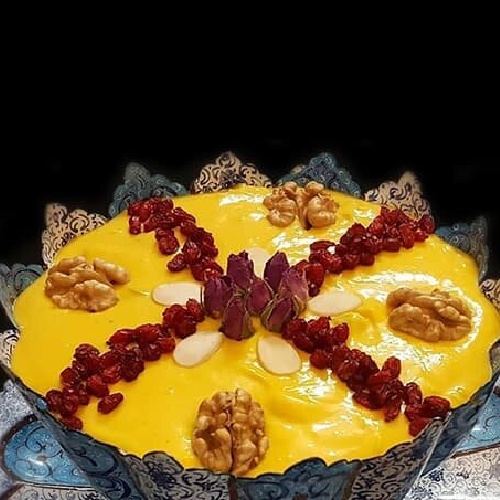
“ Khoresh Mast ” A delicious dessert
One of the delicious side dishes you must taste in Isfahan is “Khoresh Mast”. Even originally the name of this dessert is Khoresh which means stew but it is not really a stew, it is a sweet dessert. This dessert is made from ingredients like almond, sour yogurt, sugar, egg yolk, rose water, saffron and lamb neck meat. Even if there is meat inside the desert, you cannot find any taste of meat inside it. Remember you cannot find this desert in any place of the country but just in Isfahan itself. Khoresh Mast is similar to a soft sticky saffron ice cream. It is served cold and it is a very expensive dessert. In the safavid era, just the king's family and wealthy people could afford to eat this kind of desert.
Ingredients for Khoresh Mast recipe
1- A very thick and sticky yogurt without salt ………………………………. 2 and half cups
2- Meet of lamb neck………………………………………………………….. 250 gr
3- Rose water …………………………………………………………………. 1 spoon
4- Sugar………………………………………………………………………… 2 and half cups
5- Saffron………………………………………………………………………… Adequately
6- Walnut………………………………………………………………………… 1 spoon
7- Almond………………………………………………………………………... 1 spoon
8- Salt, pepper and turmeric…………………………………………………… Adequately
9- Pistachio, almond and barberry …………………………………………… Adequately
10- Small onion………………………………………………………………….. 1 piece
How to prepare Khoresh Mast
1- Boil chopped onion, meat and turmeric in a big pan until it is baked and remove the bones. mash until its color changes to white.
2- Bake yogurt and sugar until boiling.
3- Add the meat to the mixture of yogurt and sugar.
4- After boiling and mixing ingredients add walnut, almond, saffron, rose water, salt and pepper, and egg yolk.
5- After boiling enough, pour the mixture into your proper dish and decorate it with almond, pistachio and barberry.
6- Let the dish rest for 24 hours in the refrigerator.
7- Serve the dish cold like ice-cream.
Tips to prepare a yummy Khoresh Mast
Important notes to prepare a good and edible yummy Khoresh Mast:
1- Mash the meat adequately, the more the result would be proper.
2- You can fry two or three spoons of fried barberry which makes Khoresh must tastier.
3- You can add cardamom and cinnamon to the mixture.
4- During boiling you can add egg yolk, this makes the paste thicker and stickier.
5- Use full fat yogurt, avoid using low fat yogurt, it makes the mixture looser.
6- Use low fat meat, remove fat from meat because you are using walnuts and full fat yogurt.
7- Remove fats and grease from boiling meat water.
8- Gently stir and mix yogurt before boiling yogurt.
9- Instead of using sugar you can use sugar powder.
Next time you visit Isfahan , never forget to taste Khoresh Mast. Sana Persian tour and travel service provider is looking forward to visit you in Isfahan restaurant to taste Khoresh Mast .