Strait of Hormuz Tourism: The Best Places to Visit Around the Strait of Hormuz
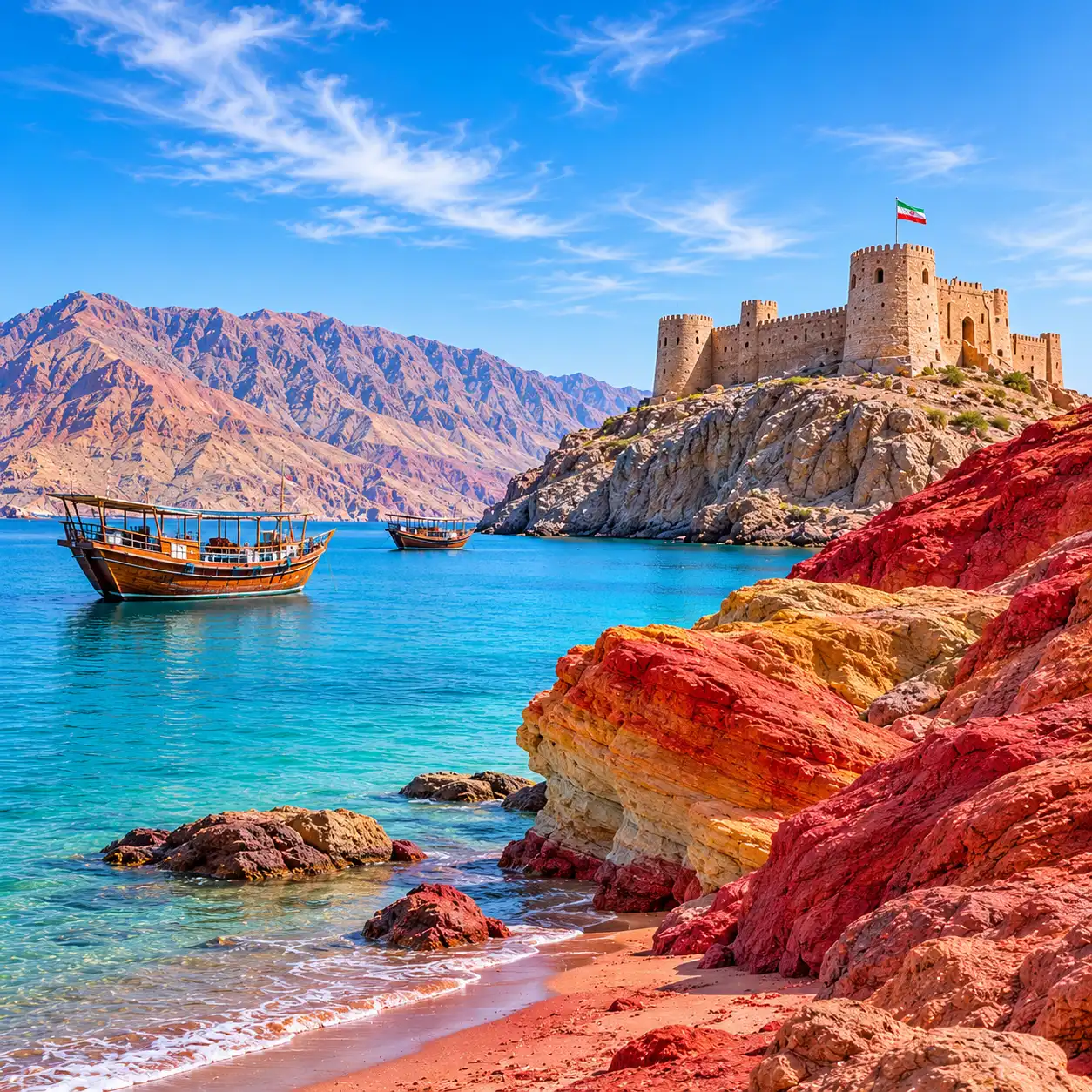
Most people know the Strait of Hormuz as a headline: a narrow ribbon of water between the Persian Gulf and the Gulf of Oman through which a large share of the world's seaborne oil travels. But for travelers, the Strait of Hormuz is something else entirely. It is a landscape of painted mountains, salt caves, mangrove forests, centuries-old Portuguese forts, quiet fishing villages and some of the most surreal beaches in the Middle East. This guide covers the best tourist attractions and sightseeing places around the Strait of Hormuz, in Iran's Hormozgan Province, with practical tips for planning your trip.
Why Visit the Strait of Hormuz?
The Strait of Hormuz is roughly 167 kilometers long and narrows to about 39 kilometers at its tightest point, with Iran on the northern shore and Oman's Musandam Peninsula to the south. For thousands of years it has been a crossroads of trade, empires and cultures. Persians, Arabs, Portuguese, Dutch and British all left their mark here, and you can still see that layered history in the forts, ports and local traditions.
What makes Strait of Hormuz tourism special is the variety packed into a small area:
- Geology that looks like another planet, with multicolored soil, salt formations and deep canyons.
- Islands you can reach in under an hour by ferry from Bandar Abbas.
- A warm, welcoming local culture with unique food, music and handicrafts.
- Wildlife, from migratory birds and dolphins to mangrove ecosystems.
The main hubs for visitors are the port city of Bandar Abbas, Hormuz Island and Qeshm Island, with smaller islands such as Hengam and Larak adding extra options for adventurous travelers.
Bandar Abbas: The Gateway to the Strait of Hormuz
Bandar Abbas is the capital of Hormozgan Province and the usual starting point for any trip to the Strait of Hormuz. It is a busy, humid, friendly port city, and while most visitors treat it as a transit stop, it deserves at least half a day.
The seafront promenade. The waterfront is where the city comes alive in the evening. Families stroll, kids play and vendors sell snacks while cargo ships glide past on the horizon. It is the easiest place to get a feel for the Strait of Hormuz as a working waterway.
The old bazaar. Bandar Abbas has traditional markets selling spices, dried fish, dates, textiles and the colorful handwoven items typical of southern Iran. This is a great place to try local flavors and pick up souvenirs before heading to the islands.
Local cuisine. Southern Iranian food is bold, spicy and rich in seafood. Look for fish and shrimp dishes with tamarind and herbs, as well as local breads and sweets.
From Bandar Abbas, ferries and boats connect to Hormuz Island and Qeshm Island, so this is where you will arrange most of your onward travel.
Hormuz Island: The Rainbow Island of the Persian Gulf
If there is one place that defines tourism in the Strait of Hormuz, it is Hormuz Island. This small island, only a short boat ride from Bandar Abbas, is famous for its vivid, painterly landscapes. It is often called the Rainbow Island because its soil and rocks glow in shades of red, orange, yellow, purple and green.
The colors come from minerals, mainly iron oxides, along with salt and other deposits. The island is a geologist's playground and a photographer's dream. Plan to spend at least a full day here, ideally staying overnight to enjoy the sunset and the quiet after day-trippers leave.
Rainbow Valley
Rainbow Valley is the island's signature attraction. Ridges and slopes of striped, multicolored earth stretch in every direction, and the colors shift with the light. Early morning and late afternoon are the best times to visit, when the hues are richest and the heat is gentler. Wear sturdy shoes, bring water and a hat, and take your time: the shapes and patterns are endlessly photogenic.
Red Beach
Red Beach is one of the most surprising beaches in the world. Iron-rich red sand meets turquoise water, creating a vivid contrast that looks almost unreal. Waves wash crimson streaks into the sea, and the shoreline seems to glow at sunset. The red soil of the island is also used locally in cooking, where it is known as gachin, a sign of how deeply the geology shapes daily life here.
Salt Goddess Valley
The Salt Goddess area, sometimes called the Valley of Statues, is a landscape of sculpted salt and rock formations shaped by wind and water over thousands of years. Locals tell legends about the figures carved by nature here. The shapes, textures and cave-like hollows make it one of the most atmospheric spots on the island and a favorite for photographers.
Silver Beach
Silver Beach offers a gentler contrast to the red shoreline. Its pale, shimmering sand and calm water make it a lovely place to rest between hikes. It is also a good spot for a picnic or simply for watching the light change over the Gulf.
Portuguese Castle of Hormuz
On the northern tip of the island stands the old Portuguese fortress, built in the early 16th century when Portugal sought control of the trade routes passing through the Strait of Hormuz. Its thick stone walls, cisterns, bastions and cannon positions tell the story of a time when whoever held this small island held the keys to Gulf commerce. Climb the walls for sweeping sea views and imagine the ships that once sailed past.
Staying and Eating on Hormuz Island
The island is small and walkable in parts, though many visitors hire a local motorbike taxi or minibus to reach the more distant sites. Guesthouses and eco-lodges, often in decorated local houses, offer simple but atmospheric stays. Meals tend to feature fresh fish, rice, and the island's distinctive red-soil sauces. Eating with local hosts is one of the highlights of the trip.
Qeshm Island: A UNESCO Global Geopark
Just west of Hormuz Island lies Qeshm, the largest island in the Persian Gulf. Qeshm was recognized as a UNESCO Global Geopark, thanks to its extraordinary geology, and it is the other essential stop on any Strait of Hormuz itinerary. You can reach it by ferry or boat from Bandar Abbas, and the island is large enough that renting a car or hiring a driver is the best way to explore.
Chahkooh Canyon
Chahkooh Canyon is a narrow, winding gorge carved into soft rock by seasonal water. The walls rise sharply on both sides, shaped into curves, columns and hollows by erosion. Walking through it feels like entering a natural cathedral. The canyon is especially striking in the soft light of late afternoon.
Stars Valley
Stars Valley is a maze of tall, sculpted sandstone formations that look like castles, spires and creatures. The local legend says the valley was formed when a star fell from the sky, which is how it earned its name. The area is magical at sunset and truly unforgettable at night, when the dark sky and rock shapes create an eerie, otherworldly atmosphere. Visit with a guide, because the terrain is complex and easy to misread in low light.
Namakdan Salt Cave
Namakdan is one of the longest salt caves in the world, running for several kilometers beneath a salt dome. Inside, crystalline stalactites hang from the ceiling, and glittering salt formations cover the walls. Local guides lead visitors through the more accessible sections. Bring a flashlight, wear shoes with good grip, and expect a cool, quiet, slightly surreal experience.
Hara Mangrove Forests
The Hara Marine Protected Area, found between Qeshm Island and the mainland, is one of the most important mangrove ecosystems in the region. Visitors can take a boat tour through channels lined with dense mangrove trees. Along the way you may spot herons, flamingos, egrets and other migratory birds, as well as fish and crabs in the shallows. At high tide the forest seems to float on the water, making it a calm, beautiful contrast to the dramatic rock landscapes elsewhere. Tours are best taken in the cooler months.
Laft Port and the Wind Towers
Laft is a historic port village known for its traditional architecture, including old wind towers that were designed to catch breezes and cool homes in the intense heat. Walking through its narrow lanes gives you a glimpse of life before air conditioning, as well as a sense of the area's long maritime heritage.
Qeshm's Portuguese Castle and Heritage Sites
Like Hormuz Island, Qeshm also has remains of Portuguese fortifications, reminders of the island's strategic importance. Combined with museums, old neighborhoods and local markets, they make the town of Qeshm a good place to learn about the island's history and meet the people who live here.
Beaches and Sea Activities
Qeshm's coastline offers calm bays, quiet beaches and opportunities for boat trips, fishing and snorkeling. Boat excursions to nearby islands are common and can be arranged locally. For travelers who want to see marine life, trips to the waters near Hengam Island are especially popular.
Hengam Island and Other Small Islands
South of Qeshm lies Hengam Island, a small, peaceful island known for its clear water and dolphin sightings. Visitors come to relax, swim, snorkel and enjoy the quiet. Larak Island and several other small islands nearby add to the sense of a scattered archipelago, though facilities are limited and trips usually need to be organized with local operators. If you want a slow, off-the-beaten-path escape within the Strait of Hormuz region, these islands are worth exploring.
Local Culture, Food and Souvenirs
The Strait of Hormuz region has a culture shaped by the sea. Here are some experiences to add to your trip:
- Seafood. Fresh fish, shrimp and crab dishes are staples, often seasoned with tamarind, garlic, chili and local herbs.
- Traditional music and dance. Southern Iranian music has distinctive rhythms influenced by African, Arab and Persian traditions.
- Handicrafts. Look for colorful embroidery, handwoven mats, jewelry, pottery and salt or soil crafts from Hormuz Island.
- Hospitality. Many travelers say the warmth of local people is the best part of the journey. Homestays and family-run lodges let you experience this firsthand.
Best Time to Visit the Strait of Hormuz
The best time for Strait of Hormuz tourism is from late autumn to early spring, roughly November through March, when temperatures are comfortable for hiking, boat trips and sightseeing. Summers are extremely hot and humid, and outdoor exploration can be exhausting. If you must travel in summer, plan activities for early morning or late evening.
How to Get There and Get Around
By air. Bandar Abbas has an airport with connections to Tehran and other Iranian cities.
By road or rail. Long-distance buses and trains also serve Bandar Abbas from other parts of Iran.
To the islands. Passenger ferries and boats run regularly from Bandar Abbas to Hormuz Island and Qeshm Island. Crossings are short, and schedules can vary with weather and season.
On the islands. Taxis, minibuses, motorbike taxis and rental cars are all common. For Qeshm Island, a driver or a rental car makes sightseeing far easier because attractions are spread out. Local guides are especially helpful in Stars Valley, the salt cave and the mangrove forests.
Practical Travel Tips
- Check current conditions. Before booking, check the latest travel advisories from your government and confirm visa requirements, flight availability and local conditions. The region's geopolitical importance means circumstances can change, so stay informed.
- Dress modestly. Iran has dress codes in public, and local communities are generally conservative. Lightweight, breathable clothing that covers arms and legs works best in the heat.
- Protect yourself from the sun. Bring sunscreen, sunglasses, a hat and plenty of water.
- Wear proper footwear. Many attractions involve uneven ground, rocks or salt formations.
- Hire local guides. They improve safety, help you find hidden spots and support the local economy.
- Respect the environment. Do not litter, break formations or disturb wildlife. These landscapes are fragile and take thousands of years to form.
- Carry cash. Not every small business accepts cards, and international cards often do not work in Iran.
Sample Itinerary: Four Days Around the Strait of Hormuz
Day 1: Bandar Abbas. Arrive, explore the seafront and bazaar, and enjoy a seafood dinner.
Day 2: Hormuz Island. Take an early boat, visit Rainbow Valley, Red Beach, Salt Goddess Valley and the Portuguese Castle. Stay overnight in a local guesthouse.
Day 3: Qeshm Island, part one. Cross to Qeshm and visit Chahkooh Canyon and the Namakdan Salt Cave, finishing at Stars Valley for sunset.
Day 4: Qeshm Island, part two. Take a boat tour of the Hara mangrove forests, visit Laft Port, and return to Bandar Abbas.
If you have more time, add a day for Hengam Island or an extra day to slow down on the beaches.
Final Thoughts
The Strait of Hormuz is far more than a strategic waterway. For travelers, it is a living gallery of color, texture and history, with rainbow hills, red beaches, salt caves, star-shaped valleys, mangrove forests and welcoming communities. Whether you spend a weekend or a week, a trip through the Strait of Hormuz region offers experiences you will not find anywhere else in the world.
If you are planning a journey to southern Iran, put Hormuz Island, Qeshm Island and Bandar Abbas at the top of your list. Go in the cooler months, travel slowly, listen to local stories, and let the landscapes do the rest.
Frequently Asked Questions
What is the most famous tourist attraction in the Strait of Hormuz? Hormuz Island's Rainbow Valley and Red Beach are the best known, along with Qeshm's Stars Valley and Namakdan Salt Cave.
How do I get to Hormuz Island? Take a ferry or boat from Bandar Abbas. The crossing is short.
Is Qeshm Island worth visiting? Yes. It is a UNESCO Global Geopark with canyons, caves, mangroves and dramatic landscapes.
When is the best time to visit? November through March offers the most comfortable weather.
How many days do I need? Three to four days is enough for the highlights, and five to six lets you explore at a relaxed pace.
Strait of Hormuz Tourism: The Best Places to Visit Around the Strait of Hormuz
Most people know the Strait of Hormuz as a headline: a narrow ribbon of water between the Persian Gulf and the Gulf of Oman through which a large share of the world's seaborne oil travels. But for travelers, the Strait of Hormuz is something else entirely. It is a landscape of painted mountains, salt caves, mangrove forests, centuries-old Portuguese forts, quiet fishing villages and some of the most surreal beaches in the Middle East.
This guide covers the best tourist attractions and sightseeing places around the Strait of Hormuz, in Iran's Hormozgan Province, with practical tips for planning your trip.
Why Visit the Strait of Hormuz?
The Strait of Hormuz is roughly 167 kilometers long and narrows to about 39 kilometers at its tightest point, with Iran on the northern shore and Oman's Musandam Peninsula to the south. For thousands of years it has been a crossroads of trade, empires and cultures. Persians, Arabs, Portuguese, Dutch and British all left their mark here, and you can still see that layered history in the forts, ports and local traditions.
What makes Strait of Hormuz tourism special is the variety packed into a small area:
- Geology that looks like another planet, with multicolored soil, salt formations and deep canyons.
- Islands you can reach in under an hour by ferry from Bandar Abbas.
- A warm, welcoming local culture with unique food, music and handicrafts.
- Wildlife, from migratory birds and dolphins to mangrove ecosystems.
The main hubs for visitors are the port city of Bandar Abbas, Hormuz Island and Qeshm Island, with smaller islands such as Hengam and Larak adding extra options for adventurous travelers.
Bandar Abbas: The Gateway to the Strait of Hormuz
Bandar Abbas is the capital of Hormozgan Province and the usual starting point for any trip to the Strait of Hormuz. It is a busy, humid, friendly port city, and while most visitors treat it as a transit stop, it deserves at least half a day.
The seafront promenade. The waterfront is where the city comes alive in the evening. Families stroll, kids play and vendors sell snacks while cargo ships glide past on the horizon. It is the easiest place to get a feel for the Strait of Hormuz as a working waterway.
The old bazaar. Bandar Abbas has traditional markets selling spices, dried fish, dates, textiles and the colorful handwoven items typical of southern Iran. This is a great place to try local flavors and pick up souvenirs before heading to the islands.
Local cuisine. Southern Iranian food is bold, spicy and rich in seafood. Look for fish and shrimp dishes with tamarind and herbs, as well as local breads and sweets.
From Bandar Abbas, ferries and boats connect to Hormuz Island and Qeshm Island, so this is where you will arrange most of your onward travel.
Hormuz Island: The Rainbow Island of the Persian Gulf
If there is one place that defines tourism in the Strait of Hormuz, it is Hormuz Island. This small island, only a short boat ride from Bandar Abbas, is famous for its vivid, painterly landscapes. It is often called the Rainbow Island because its soil and rocks glow in shades of red, orange, yellow, purple and green.
The colors come from minerals, mainly iron oxides, along with salt and other deposits. The island is a geologist's playground and a photographer's dream. Plan to spend at least a full day here, ideally staying overnight to enjoy the sunset and the quiet after day-trippers leave.
Rainbow Valley
Rainbow Valley is the island's signature attraction. Ridges and slopes of striped, multicolored earth stretch in every direction, and the colors shift with the light. Early morning and late afternoon are the best times to visit, when the hues are richest and the heat is gentler. Wear sturdy shoes, bring water and a hat, and take your time: the shapes and patterns are endlessly photogenic.
Red Beach
Red Beach is one of the most surprising beaches in the world. Iron-rich red sand meets turquoise water, creating a vivid contrast that looks almost unreal. Waves wash crimson streaks into the sea, and the shoreline seems to glow at sunset. The red soil of the island is also used locally in cooking, where it is known as gachin, a sign of how deeply the geology shapes daily life here.
Salt Goddess Valley
The Salt Goddess area, sometimes called the Valley of Statues, is a landscape of sculpted salt and rock formations shaped by wind and water over thousands of years. Locals tell legends about the figures carved by nature here. The shapes, textures and cave-like hollows make it one of the most atmospheric spots on the island and a favorite for photographers.
Silver Beach
Silver Beach offers a gentler contrast to the red shoreline. Its pale, shimmering sand and calm water make it a lovely place to rest between hikes. It is also a good spot for a picnic or simply for watching the light change over the Gulf.
Portuguese Castle of Hormuz
On the northern tip of the island stands the old Portuguese fortress, built in the early 16th century when Portugal sought control of the trade routes passing through the Strait of Hormuz. Its thick stone walls, cisterns, bastions and cannon positions tell the story of a time when whoever held this small island held the keys to Gulf commerce. Climb the walls for sweeping sea views and imagine the ships that once sailed past.
Staying and Eating on Hormuz Island
The island is small and walkable in parts, though many visitors hire a local motorbike taxi or minibus to reach the more distant sites. Guesthouses and eco-lodges, often in decorated local houses, offer simple but atmospheric stays. Meals tend to feature fresh fish, rice, and the island's distinctive red-soil sauces. Eating with local hosts is one of the highlights of the trip.
Qeshm Island: A UNESCO Global Geopark
Just west of Hormuz Island lies Qeshm, the largest island in the Persian Gulf. Qeshm was recognized as a UNESCO Global Geopark, thanks to its extraordinary geology, and it is the other essential stop on any Strait of Hormuz itinerary. You can reach it by ferry or boat from Bandar Abbas, and the island is large enough that renting a car or hiring a driver is the best way to explore.
Chahkooh Canyon
Chahkooh Canyon is a narrow, winding gorge carved into soft rock by seasonal water. The walls rise sharply on both sides, shaped into curves, columns and hollows by erosion. Walking through it feels like entering a natural cathedral. The canyon is especially striking in the soft light of late afternoon.
Stars Valley
Stars Valley is a maze of tall, sculpted sandstone formations that look like castles, spires and creatures. The local legend says the valley was formed when a star fell from the sky, which is how it earned its name. The area is magical at sunset and truly unforgettable at night, when the dark sky and rock shapes create an eerie, otherworldly atmosphere. Visit with a guide, because the terrain is complex and easy to misread in low light.
Namakdan Salt Cave
Namakdan is one of the longest salt caves in the world, running for several kilometers beneath a salt dome. Inside, crystalline stalactites hang from the ceiling, and glittering salt formations cover the walls. Local guides lead visitors through the more accessible sections. Bring a flashlight, wear shoes with good grip, and expect a cool, quiet, slightly surreal experience.
Hara Mangrove Forests
The Hara Marine Protected Area, found between Qeshm Island and the mainland, is one of the most important mangrove ecosystems in the region. Visitors can take a boat tour through channels lined with dense mangrove trees. Along the way you may spot herons, flamingos, egrets and other migratory birds, as well as fish and crabs in the shallows. At high tide the forest seems to float on the water, making it a calm, beautiful contrast to the dramatic rock landscapes elsewhere. Tours are best taken in the cooler months.
Laft Port and the Wind Towers
Laft is a historic port village known for its traditional architecture, including old wind towers that were designed to catch breezes and cool homes in the intense heat. Walking through its narrow lanes gives you a glimpse of life before air conditioning, as well as a sense of the area's long maritime heritage.
Qeshm's Portuguese Castle and Heritage Sites
Like Hormuz Island, Qeshm also has remains of Portuguese fortifications, reminders of the island's strategic importance. Combined with museums, old neighborhoods and local markets, they make the town of Qeshm a good place to learn about the island's history and meet the people who live here.
Beaches and Sea Activities
Qeshm's coastline offers calm bays, quiet beaches and opportunities for boat trips, fishing and snorkeling. Boat excursions to nearby islands are common and can be arranged locally. For travelers who want to see marine life, trips to the waters near Hengam Island are especially popular.
Hengam Island and Other Small Islands
South of Qeshm lies Hengam Island, a small, peaceful island known for its clear water and dolphin sightings. Visitors come to relax, swim, snorkel and enjoy the quiet. Larak Island and several other small islands nearby add to the sense of a scattered archipelago, though facilities are limited and trips usually need to be organized with local operators. If you want a slow, off-the-beaten-path escape within the Strait of Hormuz region, these islands are worth exploring.
Local Culture, Food and Souvenirs
The Strait of Hormuz region has a culture shaped by the sea. Here are some experiences to add to your trip:
- Seafood. Fresh fish, shrimp and crab dishes are staples, often seasoned with tamarind, garlic, chili and local herbs.
- Traditional music and dance. Southern Iranian music has distinctive rhythms influenced by African, Arab and Persian traditions.
- Handicrafts. Look for colorful embroidery, handwoven mats, jewelry, pottery and salt or soil crafts from Hormuz Island.
- Hospitality. Many travelers say the warmth of local people is the best part of the journey. Homestays and family-run lodges let you experience this firsthand.
Best Time to Visit the Strait of Hormuz
The best time for Strait of Hormuz tourism is from late autumn to early spring, roughly November through March, when temperatures are comfortable for hiking, boat trips and sightseeing. Summers are extremely hot and humid, and outdoor exploration can be exhausting. If you must travel in summer, plan activities for early morning or late evening.
How to Get There and Get Around
By air. Bandar Abbas has an airport with connections to Tehran and other Iranian cities.
By road or rail. Long-distance buses and trains also serve Bandar Abbas from other parts of Iran.
To the islands. Passenger ferries and boats run regularly from Bandar Abbas to Hormuz Island and Qeshm Island. Crossings are short, and schedules can vary with weather and season.
On the islands. Taxis, minibuses, motorbike taxis and rental cars are all common. For Qeshm Island, a driver or a rental car makes sightseeing far easier because attractions are spread out. Local guides are especially helpful in Stars Valley, the salt cave and the mangrove forests.
Practical Travel Tips
- Check current conditions. Before booking, check the latest travel advisories from your government and confirm visa requirements, flight availability and local conditions. The region's geopolitical importance means circumstances can change, so stay informed.
- Dress modestly. Iran has dress codes in public, and local communities are generally conservative. Lightweight, breathable clothing that covers arms and legs works best in the heat.
- Protect yourself from the sun. Bring sunscreen, sunglasses, a hat and plenty of water.
- Wear proper footwear. Many attractions involve uneven ground, rocks or salt formations.
- Hire local guides. They improve safety, help you find hidden spots and support the local economy.
- Respect the environment. Do not litter, break formations or disturb wildlife. These landscapes are fragile and take thousands of years to form.
- Carry cash. Not every small business accepts cards, and international cards often do not work in Iran.
Sample Itinerary: Four Days Around the Strait of Hormuz
Day 1: Bandar Abbas. Arrive, explore the seafront and bazaar, and enjoy a seafood dinner.
Day 2: Hormuz Island. Take an early boat, visit Rainbow Valley, Red Beach, Salt Goddess Valley and the Portuguese Castle. Stay overnight in a local guesthouse.
Day 3: Qeshm Island, part one. Cross to Qeshm and visit Chahkooh Canyon and the Namakdan Salt Cave, finishing at Stars Valley for sunset.
Day 4: Qeshm Island, part two. Take a boat tour of the Hara mangrove forests, visit Laft Port, and return to Bandar Abbas.
If you have more time, add a day for Hengam Island or an extra day to slow down on the beaches.
Final Thoughts
The Strait of Hormuz is far more than a strategic waterway. For travelers, it is a living gallery of color, texture and history, with rainbow hills, red beaches, salt caves, star-shaped valleys, mangrove forests and welcoming communities. Whether you spend a weekend or a week, a trip through the Strait of Hormuz region offers experiences you will not find anywhere else in the world.
If you are planning a journey to southern Iran, put Hormuz Island, Qeshm Island and Bandar Abbas at the top of your list. Go in the cooler months, travel slowly, listen to local stories, and let the landscapes do the rest.
Frequently Asked Questions
What is the most famous tourist attraction in the Strait of Hormuz? Hormuz Island's Rainbow Valley and Red Beach are the best known, along with Qeshm's Stars Valley and Namakdan Salt Cave.
How do I get to Hormuz Island? Take a ferry or boat from Bandar Abbas. The crossing is short.
Is Qeshm Island worth visiting? Yes. It is a UNESCO Global Geopark with canyons, caves, mangroves and dramatic landscapes.
When is the best time to visit? November through March offers the most comfortable weather.
How many days do I need? Three to four days is enough for the highlights, and five to six lets you explore at a relaxed pace.