Kharg Island Iran: Location, History, Oil & Tourism Guide
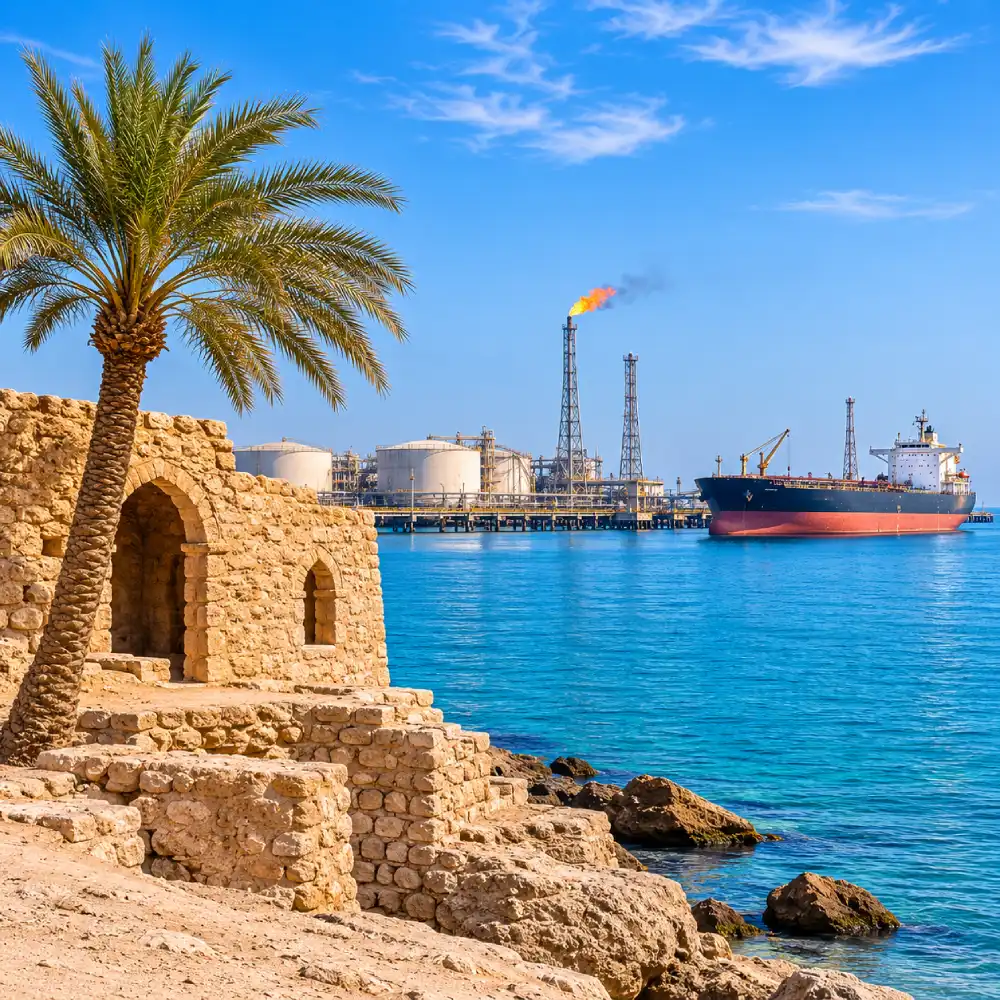
Kharg Island is one of the most strategically important islands in the Persian Gulf. Located off the coast of Bushehr Province in southern Iran, this small island is best known for its role as the country's main crude oil export terminal. Yet its importance goes far beyond the energy industry. Kharg also has a remarkable history of maritime trade, ancient settlements, religious heritage, and archaeological discoveries. Often described as one of Iran's most important energy gateways, Kharg Island connects the country's mainland oil fields to international shipping routes. Its location near the Strait of Hormuz makes it particularly significant for regional trade and global energy markets. For travelers and history enthusiasts, the island offers another story: centuries of Persian Gulf commerce, pearl fishing, ancient burial sites, and the remains of an early Christian monastic complex. This guide explores Kharg Island in Iran, including its geographical location, oil industry, historical heritage, strategic importance, and the restrictions that affect tourism.
Where Is Kharg Island Located?
Kharg Island lies in the northern Persian Gulf, approximately 26 kilometers (16 miles) from Iran's mainland coast. It belongs to Bushehr Province and is situated northwest of the port city of Bushehr.
The island is approximately 13 kilometers (8 miles) long and has an area of around 21 square kilometers (8.1 square miles). Its relatively small size contrasts sharply with its importance to Iran's economy and maritime infrastructure.
Kharg is also located approximately 483 kilometers (300 miles) northwest of the Strait of Hormuz, one of the world's most important maritime passages for international energy transportation.
Its geographical position provides access to deep waters suitable for large oil tankers. This natural advantage helped transform Kharg from a relatively quiet island into a major industrial and shipping center.
Administratively, Kharg belongs to Bushehr Province. The nearby island of Khargu, also known as Kharku, is a separate and much smaller island located to its north.
What Is Kharg Island Known For?
Kharg Island is primarily known for three things:
-
Oil exports: It is Iran's principal crude oil export terminal and has historically handled around 90% of the country's crude exports.
-
Strategic location: Its position in the northern Persian Gulf connects Iranian energy infrastructure to international shipping routes.
-
Historical heritage: Archaeological remains reveal a long history of maritime trade, pearl fishing, religious activity, and settlement.
Although modern oil infrastructure dominates much of the island, Kharg has a much older cultural and commercial history.
Why Is Kharg Island Important to Iran's Oil Industry?
Kharg Island plays a central role in Iran's oil export network. Since the development of its modern terminal infrastructure in the mid-20th century, it has become the country's most important gateway for transporting crude oil to international markets.
Unlike an oil-producing region, Kharg mainly functions as a collection, storage, and export center. Crude oil is transported from mainland oil fields through pipelines before being stored and loaded onto tankers.
How Much Oil Passes Through Kharg Island?
Before the major disruptions of 2026, approximately 90% of Iran's crude oil exports passed through Kharg Island.
According to Reuters reporting published in March 2026, tanker-tracking data indicated that approximately 1.55 million barrels per day were being shipped through Kharg during the period covered by the report.
Iran's crude exports had reached approximately 2.17 million barrels per day in February 2026, according to the same report. These figures describe a period before the subsequent wartime and shipping disruptions and should not be interpreted as current export levels.
The island's importance comes from the concentration of export infrastructure in one location. Any prolonged interruption to loading operations can therefore create serious challenges for Iran's ability to sell crude oil abroad.
Kharg Island's Oil Storage and Loading Capacity
Kharg has extensive infrastructure designed to receive, store, and load crude oil.
Its principal facilities include:
-
Large crude oil storage tanks.
-
Pipeline connections to mainland production areas.
-
Offshore loading platforms and marine terminals.
-
Deep-water berths suitable for very large crude carriers.
-
Supporting facilities for tanker operations and oil transportation.
Estimates of the island's storage capacity vary, but approximately 30 million barrels is a widely reported figure.
Its deep-water location is particularly valuable because very large crude carriers require suitable maritime conditions and specialized loading infrastructure.
Where Does Kharg Island's Oil Come From?
The crude oil exported from Kharg is transported from oil-producing regions on Iran's mainland.
Important producing areas include parts of Khuzestan Province, where some of Iran's largest oil fields are located.
Fields such as Ahvaz, Marun, and Gachsaran are among the major sources associated with the country's southern oil transportation network.
Pipelines carry crude toward export facilities, where it can be stored before being transferred to tankers.
In simple terms, Kharg functions as a major connection between inland oil production and international maritime trade.
Who Buys Iran's Oil From Kharg Island?
China has historically been the principal destination for much of Iran's exported crude oil.
Chinese independent refineries have played an important role in purchasing Iranian oil, often through complex trading and shipping arrangements affected by international sanctions.
Because of these commercial relationships, changes in Iranian oil exports can affect not only Iran's economy but also regional energy markets and Asian refining supply chains.
However, the actual destination of individual shipments can be difficult to establish because some cargoes pass through intermediaries or ship-to-ship transfers.
Why Is Kharg Island Strategically Important?
Kharg's strategic significance comes from the combination of its oil infrastructure, geographical position, and limited alternatives within Iran's export network.
1. Iran's Dependence on a Single Major Export Hub
A large share of Iran's crude exports has historically passed through Kharg Island.
This concentration makes the terminal extremely important to the country's energy economy. It also creates a vulnerability because a serious disruption to the island's operations could reduce the volume of crude Iran can export.
Iran has other export facilities, including Lavan Island and the Jask terminal, but these alternatives have not historically matched Kharg's overall importance and established infrastructure.
2. Its Connection to the Strait of Hormuz
Oil tankers departing from Kharg must navigate the Persian Gulf and pass through the Strait of Hormuz to reach the Gulf of Oman and international shipping routes.
The Strait of Hormuz is one of the world's most important energy chokepoints.
Millions of barrels of oil and petroleum products move through this narrow passage every day, making its security essential to international energy transportation.
Any disruption to shipping in the area can affect oil markets, maritime insurance, transportation costs, and international trade.
3. Its Influence on Global Oil Markets
Because Kharg handles such a significant proportion of Iran's crude exports, disruptions at the terminal can create uncertainty in international oil markets.
The potential effects extend beyond Iran. Oil-importing countries, refineries, shipping companies, and energy traders may all be affected by changes in regional supply.
For consumers in the United States and other countries, developments in the Persian Gulf can indirectly influence fuel prices and broader energy costs.
4. Its Importance to China's Energy Trade
China has been the main destination for much of Iran's crude oil.
This relationship gives Kharg an important role in the wider energy trade between the Persian Gulf and East Asia.
Any significant reduction in Iranian exports could require refiners to seek alternative supplies, potentially affecting shipping patterns and regional crude oil demand.
Kharg Island's History and Archaeological Heritage
Long before oil tankers arrived, Kharg Island was known as a location for maritime trade, pearl fishing, and commercial activity in the Persian Gulf.
Its position along regional shipping routes made it a useful stopping point for merchants and sailors traveling between the Iranian coast, southern Mesopotamia, and the Indian Ocean.
Historical and archaeological evidence suggests that the island's importance goes back many centuries.
An Ancient Center of Persian Gulf Trade
Kharg appears in historical geographical accounts dating back to the medieval period.
The 10th-century geographical work Hudud al-Alam mentions the island as a place associated with valuable pearls.
Pearl fishing was an important part of the traditional economy of the Persian Gulf, and Kharg became known for its maritime resources.
The island also served as a stopping point for merchant vessels traveling between Basra, India, and ports along the Iranian coast.
Its commercial importance continued through different historical periods, including the medieval era and the expansion of European maritime trade in the Persian Gulf.
The Ancient Christian Monastery of Kharg
One of Kharg Island's most remarkable archaeological discoveries is an extensive early Christian monastic complex.
According to archaeological research discussed in Encyclopaedia Iranica, the complex included a church, monks' cells, a library, a refectory, and other religious spaces arranged around a large enclosure.
The church was designed along an east-west axis and featured a central nave and surrounding architectural spaces.
Archaeologists have also identified evidence of a religious community that may have been active between the 7th and 9th centuries, although the exact date of its foundation remains a subject of scholarly discussion.
The discovery is particularly significant because it represents one of the most important surviving examples of Christian archaeological heritage in the Persian Gulf region.
Ancient Tombs and Other Archaeological Remains
Kharg contains several archaeological remains that reveal its diverse cultural history.
Among the most notable are two large rock-cut tombs known as the Eastern Tomb and the Southern Tomb.
These structures feature elaborate entrances and internal burial chambers carved directly into the rock.
Researchers have also documented other burial sites, religious structures, and historical inscriptions.
Together, these discoveries demonstrate that Kharg was more than a commercial stopping point. It was also a place where different communities lived, traded, and practiced their religious traditions.
Kharg Island and the Dutch Trading Period
During the 18th century, Kharg became involved in European commercial competition in the Persian Gulf.
The Dutch East India Company established a trading presence on the island in the 1750s.
A settlement and fort were constructed, and European merchants attempted to develop the island as a commercial center.
Dutch control ended in 1766 after the forces of Mir Muhanna captured the island's fort.
This period left another layer of historical significance in Kharg's long maritime history.
Kharg Island During the Iran-Iraq War
Kharg became a major target during the Iran-Iraq War of 1980–1988.
Because of its central role in Iran's oil export system, Iraqi forces repeatedly attacked the island and its surrounding infrastructure.
The attacks damaged oil facilities, storage tanks, and loading installations, disrupting export operations.
Despite these challenges, Iran continued working to maintain and restore its oil transportation network.
The island's experience during the war demonstrated how closely energy infrastructure and national security were connected in the Persian Gulf.
Following the conflict, reconstruction and expansion helped restore Kharg's position as Iran's principal crude oil export terminal.
Can Tourists Visit Kharg Island?
Kharg Island is not a conventional tourist destination.
Although it has historical and archaeological attractions, its extensive oil infrastructure and strategic importance mean that access is restricted.
Visitors should not assume that ordinary tourism arrangements or standard domestic travel permissions are sufficient to enter the island.
Anyone considering a visit should first obtain confirmation of the current entry requirements from the relevant Iranian authorities and arrange any necessary permissions before traveling.
The island's restricted status also means that accommodation, visitor services, and organized sightseeing opportunities may be limited.
For international visitors, including American citizens, additional visa and travel requirements may apply depending on nationality and current regulations.
Travel conditions and restrictions can change, so official confirmation is essential before making plans.
Recent Developments: Kharg Island in 2026
Kharg Island remained at the center of international attention during 2026 because of escalating regional tensions and disruptions to Iranian oil exports.
On March 14, 2026, Reuters reported that U.S. forces had struck military targets on the island. The report highlighted concerns about the potential consequences of any damage to Kharg's oil infrastructure.
At the time, tanker-tracking data showed that Iranian crude shipments were continuing, although the wider conflict created uncertainty about future exports and maritime security.
Later developments further affected the island's role in international energy trade.
In August 2026, Reuters reported that a U.S. naval blockade of Iranian oil exports had disrupted shipments from Kharg.
On November 20, 2026, Euronews reported that more than 14 tankers were being prepared at Kharg in connection with an apparent effort to resume or challenge restrictions on Iranian oil exports. The report cited satellite imagery and ship-tracking information.
These developments illustrate how Kharg's importance extends beyond the energy sector. Its operations are closely connected to regional security, international sanctions, maritime transportation, and global oil markets.
Because the situation continues to evolve, historical export figures should not be treated as a reliable measure of current shipping activity.
Kharg Island: Key Facts at a Glance
| Feature | Information |
|---|---|
| Country | Iran |
| Province | Bushehr |
| Region | Northern Persian Gulf |
| Distance from mainland | Approximately 26 km |
| Distance from Strait of Hormuz | Approximately 483 km |
| Area | Approximately 21 square km |
| Main function | Crude oil export terminal |
| Main export market | Historically China |
| Historical importance | Maritime trade and pearl fishing |
| Archaeological heritage | Early Christian monastery and ancient tombs |
| Tourism access | Restricted |
Frequently Asked Questions About Kharg Island
Where is Kharg Island in Iran?
Kharg Island is located in the northern Persian Gulf, approximately 26 kilometers off the coast of Bushehr Province in southern Iran.
What is Kharg Island famous for?
Kharg is best known for its major crude oil export terminal. It is also recognized for its ancient maritime history, pearl fishing traditions, archaeological remains, and early Christian heritage.
Why is Kharg Island important to the global oil market?
The island has historically handled around 90% of Iran's crude oil exports. Consequently, disruptions to its oil terminal can affect Iranian export capacity and create uncertainty in international energy markets.
How much oil can Kharg Island store?
Kharg Island's oil storage capacity is commonly estimated at approximately 30 million barrels, although reported figures can vary depending on the facilities and measurement period.
Does Kharg Island produce oil?
No. Kharg is primarily an oil storage and export center. Crude oil is transported from mainland Iranian oil fields through pipelines before being loaded onto tankers.
Can foreigners visit Kharg Island?
Access is restricted because of the island's industrial and strategic importance. Foreign visitors should obtain official information about entry permissions and travel requirements before considering a visit.
Does Kharg Island have historical attractions?
Yes. Its archaeological heritage includes ancient rock-cut tombs, religious structures, historical inscriptions, and the remains of an early Christian monastic complex.
What happened to Kharg Island in 2026?
The island attracted international attention following military strikes on March 14, 2026, and subsequent disruptions to Iranian oil exports. Shipping restrictions and reported tanker movements continued to affect its role in international energy trade later in the year.
Final Thoughts: Why Kharg Island Matters
Kharg Island is much more than a small island in the Persian Gulf. It is a place where Iran's economic interests, maritime geography, ancient history, and modern geopolitical challenges intersect.
Its oil terminal makes it one of the most important locations in Iran's energy network, while its archaeological remains reveal a cultural history that stretches back centuries.
For anyone interested in understanding Iran's geography, the history of the Persian Gulf, or the relationship between energy and international trade, Kharg Island offers a fascinating example of how a relatively small place can have an enormous influence on regional and global affairs.